Additive manufacturing (AM) technology is a driver of innovation in the medical field, transforming traditional healthcare. Its core advantages are precision, personalization, and efficiency. It has profoundly changed many areas, including medical models, implants, surgical guides, instruments, and biomanufacturing, which improves diagnosis and treatment, increases surgical success rates, and enhances patient experience.
What are the Advantages of Additive Manufacturing in Medical Applications?
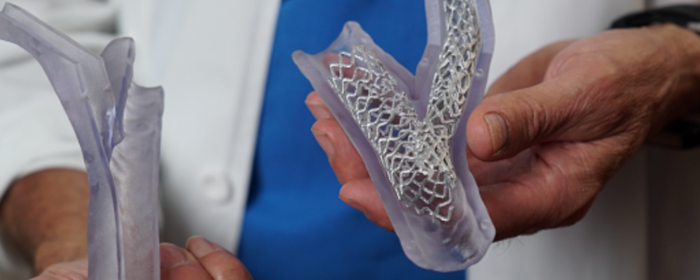
Medical 3D printing enables precise visualization and pre-operative planning. Each patient's anatomy is unique, so traditional methods often struggle with complex conditions. 3D printing converts 2D medical images (like CT or MRI scans) into high-precision physical 3D models, which allows doctors to view complex internal structures in a three-dimensional and intuitive way. Doctors can even perform simulated surgeries on these models, for example, they can practice fracture reduction beforehand. This helps identify and solve potential problems, reducing uncertainty and risk in complex surgeries.
Furthermore, medical 3D printing supports highly personalized treatment plans. It can create custom implants tailored to a patient's specific anatomy, like the shape of a hip socket or a skull defect. This improves treatment outcomes and patient comfort after surgery.
3D printing also significantly improves doctor-patient communication. A tangible, physical model helps patients and their families better understand the condition and treatment plan. This builds trust and promotes more effective cooperation.
From an efficiency standpoint, 3D printing also shows clear advantages. It revolutionizes the traditional modeling process. The cycle from mold-taking to final product, which used to take days, is now reduced to just hours. Digital technology also helps avoid errors common in traditional methods.
Moreover, 3D printing expands the range of usable medical materials. Common printing materials now include metals, polymers, and inorganic non-metallic materials. These materials offer good biocompatibility and can mimic the functionality of human tissues. Doctors can even add personalized antibiotic or antibacterial coatings to implants, which further enhances treatment safety and targeting.
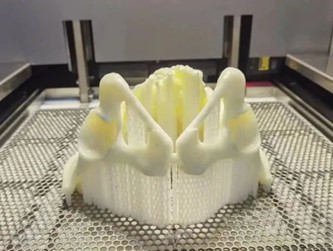
Fig 1. 3D Model
What Medical Applications Involve Additive Manufacturing Processes?
Additive manufacturing processes are now rapidly developing and widely used in the medical industry. Major applications include:
- Medical models
- Implants
- Tools, instruments, and parts for medical devices
- Medical aids, supportive guides, splints, and prostheses
- Biomanufacturing.
1. Medical Models
Medical models based on intraoperative anatomy are used for pre- and post-operative planning, training medical students, and informing patients and families. They are widely used in the craniomaxillofacial region, but also for limbs and other skeletal structures (like the spine and pelvis). Figure 2 shows the typical process for creating medical models. Patient anatomy is captured via medical imaging, and segmentation algorithms are used to build a 3D model for additive manufacturing. Post-processing, like support removal, is usually required after printing.
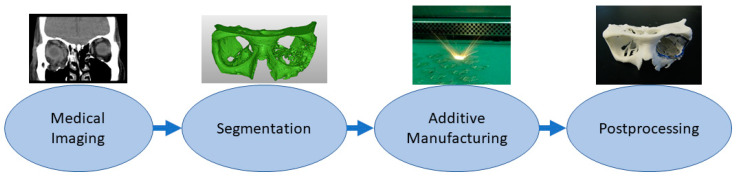
Fig 2. Typical process flow for medical models.[1]
Processes Involved: Material extrusion, vat photopolymerization, or powder bed fusion are commonly used to balance precision, speed, and cost.
Material Options: Various photopolymer resins, plastics (like ABS, PLA, nylon), and gypsum composites are widely used. These materials need good formability and sufficient strength for pre-op simulation, education, and communication.
2. Implants
Implants are manufactured directly or indirectly to replace defective or missing tissues. They are also used in dentistry for crowns and bridges. These materials must be compatible with host tissue, requiring strict standards and long approval processes. The most typical implants are made via metal powder bed fusion and require various post-processing steps like support removal, polishing, and heat treatment. Implants must be sterilized before surgery. Figure 3 shows the typical workflow for additively manufactured implants, from medical imaging and segmentation to 3D modeling, AM, post-processing, and sterilization.
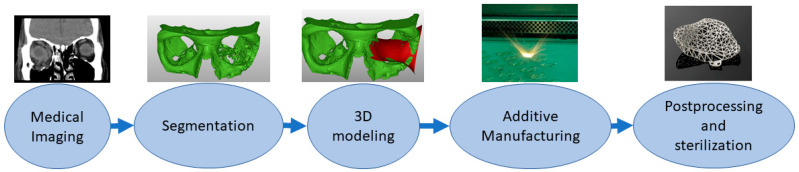
Fig 3. Typical process flow for implants. [1]
Processes Involved: Powder bed fusion (e.g., SLM, EBM) is the mainstream process, as it produces dense metal parts meeting strict mechanical and biological requirements.
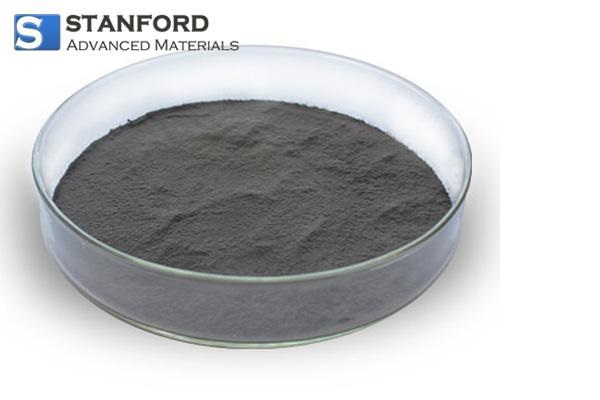
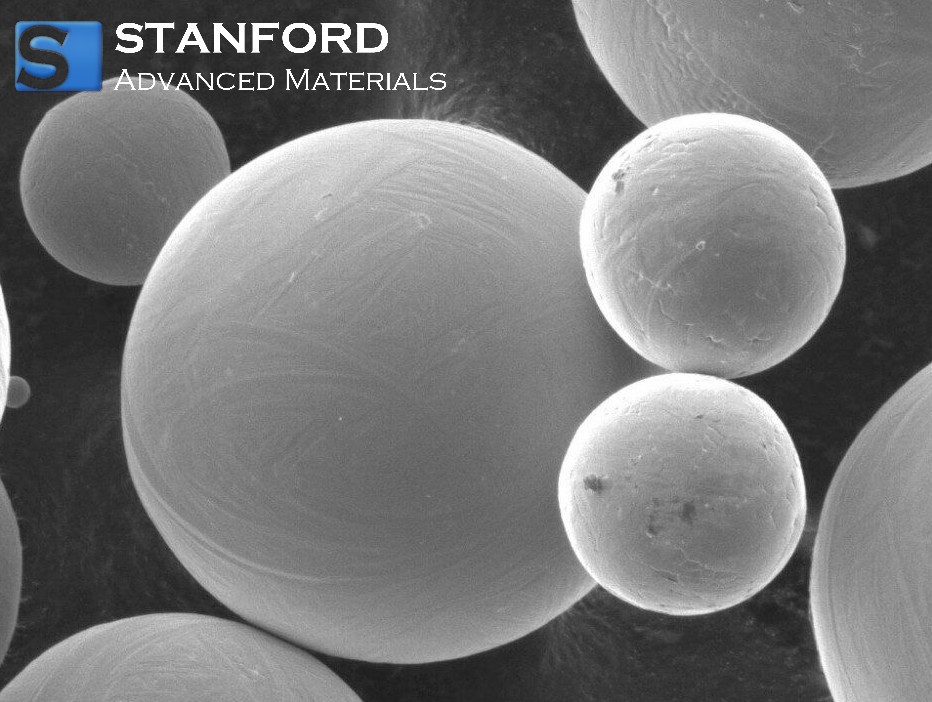
Material Options: Metal powders with excellent biocompatibility are primarily used, such as titanium and its alloys, tantalum, cobalt-chromium alloys, and biodegradable magnesium alloys. These are ideal for orthopedic, craniomaxillofacial, and dental implants.
Read more: Understanding Metal Powders in Medical Industry
For more metal powders for medical 3D printing, please view Stanford Advanced Materials.
3. Tools, Instruments, and Parts for Medical Devices
These tools, instruments, and parts are used to assist medical treatment. Sometimes they need to be customized for individual patients. They require certain biocompatibility and must withstand sterilization processes. This is because they can be invasive and contact patient fluids, membranes, tissues, and organs. They are usually sterilized before use, such as surgical instruments and orthodontic appliances. Figure 4 shows a typical manufacturing process. A patient's teeth are 3D scanned, followed by 3D modeling, vat photopolymerization AM, post-processing, and using the produced part as a mold for soft orthodontic aligners.
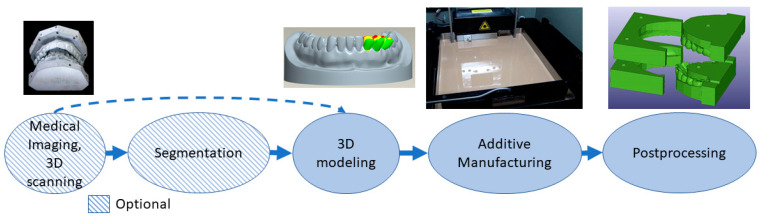
Fig 4. Typical process flow for tools, instruments and parts for medical devices. [1]
Processes Involved: Vat photopolymerization and material extrusion are common, efficiently producing customized devices and parts with complex structures.
Material Options: Medical-grade photopolymer resins and high-performance engineering plastics are primarily selected. These materials must withstand repeated sterilization and meet specific biocompatibility requirements.
4. Medical Aids, Supportive Guides, Splints, and Prostheses
In this category, AM-produced parts are external and can be combined with standard devices for customization. This includes long-term and post-operative supports, motion guides, fixators, external prostheses, prosthetic sockets, and personalized splints. The typical process is shown in Figure 5, for a personalized movable external brace for a pilon fracture. 3D modeling is based on measuring patient ankle movement, and the AM part is adjusted to position the hinge, mimicking the ankle's free movement under controlled force.
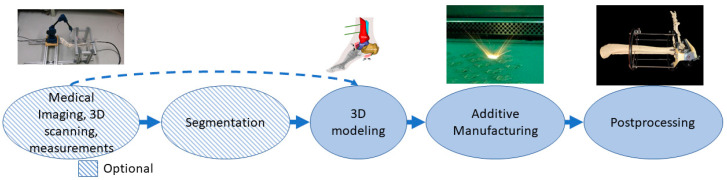
Fig 5. The typical process flow for medical aids, supportive guides, splints and prostheses. [1]
Processes Involved: Material extrusion is particularly prevalent here, as it is well-suited for rapid, low-cost production of personalized external aids.
Material Options: Thermoplastics like PLA, ABS, and nylon are widely used. They are easy to print and post-process, offering a good balance of strength, weight, and comfort for patient use.
5. Biomanufacturing
Biomanufacturing combines additive manufacturing with tissue engineering. Materials must be biocompatible, osteoinductive, osteoconductive, and absorbable, like polymers, ceramics, and composites. Their shape can be personalized to match the defect. Figure 6 shows an application example for a resorbable orbital floor implant. CT and segmentation define the patient's geometry, followed by 3D modeling and AM. The implant is sterilized after manufacturing.
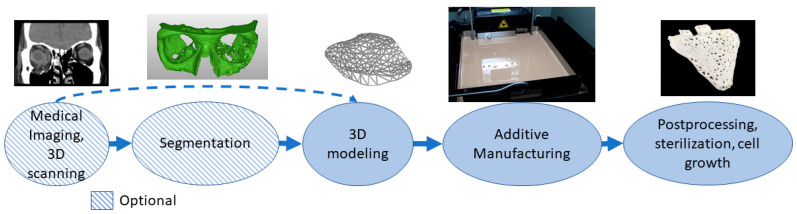
Fig 6. Typical process flow for biomanufacturing. [1]
Processes Involved: Frontier technologies include bioprinting and vat photopolymerization, which can preserve cell viability during manufacturing.
Material Options: The core materials are bioinks. Their components include natural and synthetic polymers (e.g., gelatin, alginate, PCL), bioceramics (e.g., tricalcium phosphate), and their composites. These materials are not only biocompatible but often designed to be absorbable by the body.
FAQs on Medical Additive Manufacturing
What are the main benefits of using additive manufacturing in medicine?
The core advantage of additive manufacturing in medicine is its ability to enable precise personalization. It can produce implants, models, or aids that perfectly match a patient's specific anatomical data.
2. What are the main different printing technologies used in hospitals?
Three standardized processes are widely used in the medical field:
- Powder Bed Fusion: Often used for metal implants.
- Vat Photopolymerization: Suitable for high-precision models and surgical guides.
- Material Extrusion: Widely used for medical models and external aids.
Additionally, specialized technologies like bioprinting are emerging in frontier areas like biomanufacturing.
3. What materials are typically used in these medical additive manufacturing technologies?
In established medical applications, materials and processes have stable combinations.
- Metal Printing: Primarily uses titanium alloys for load-bearing implants like bones and joints.
- Photopolymerization: Uses medical resins for high-precision surgical guides.
- Plastic Printing: Commonly uses PLA/Nylon for medical models and rehabilitation splints.
4. Which directions in future medical 3D printing are most likely to achieve breakthroughs?
Research generally believes the field of biomanufacturing, particularly tissue engineering and organ printing using processes like bioprinting, shows great future potential. The scientific breakthrough involves using composite materials like biodegradable polymers and bioceramics to create active structures that promote the regeneration and repair of the body's own tissues.
[1] Salmi, M. Additive Manufacturing Processes in Medical Applications. Materials 2021, 14, 191. https://www.mdpi.com/948232