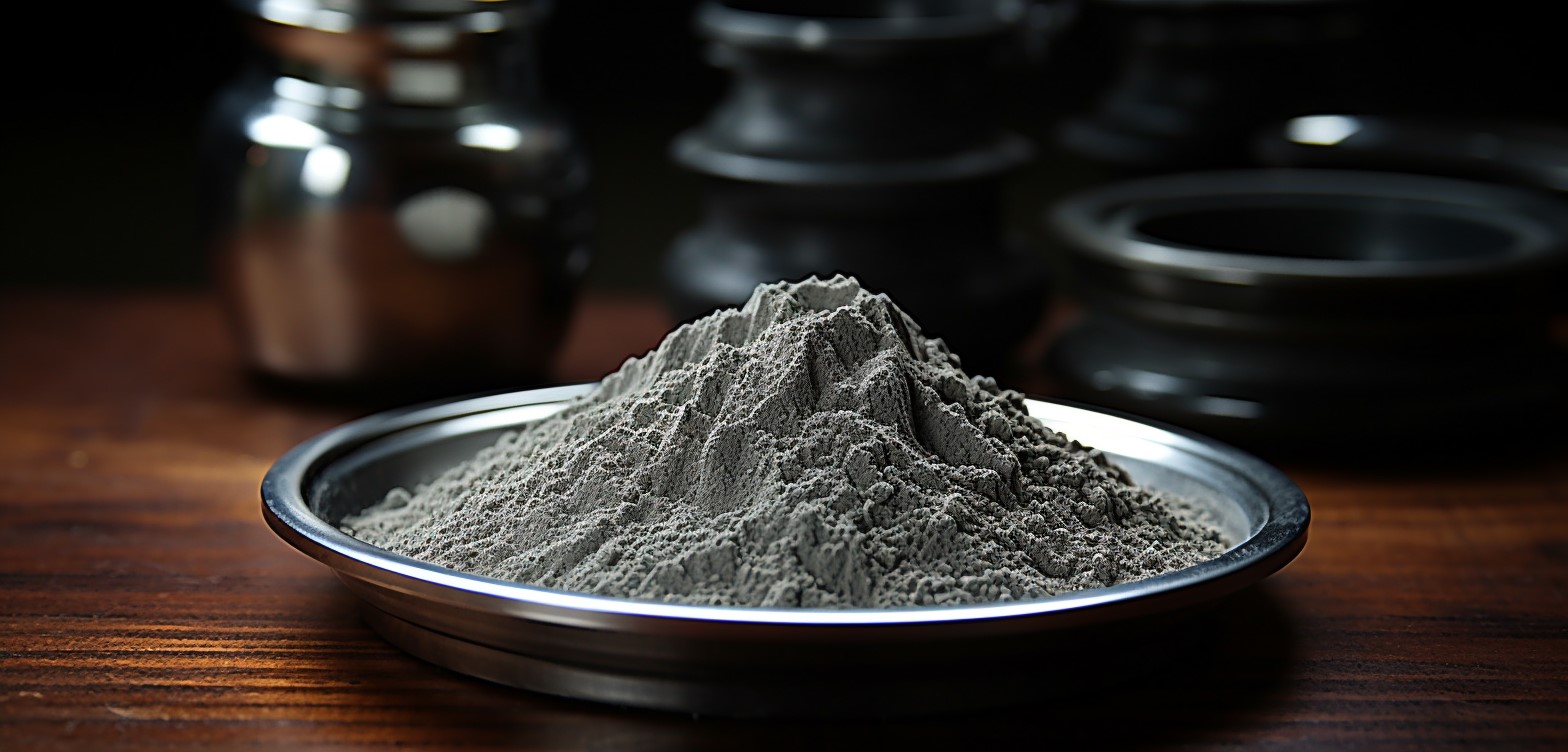
Although both chromium oxide and chromium trioxide contain chromium and oxygen, their chemical composition, properties, and applications are fundamentally different.
Comparison Overview
1. Information
|
Property
|
Chromium Oxide
|
Chromium Trioxide
|
|
Chemical Formula
|
Cr₂O₃
|
CrO₃
|
|
Oxidation State of Cr
|
+3
|
+6
|
|
Common Name
|
Chromium Oxide Green, Chrome Green
|
Chromic Anhydride
|
|
Uses
|
- Pigment
- Abrasive
- Metallurgy
- Catalyst
|
- Electroplating
- Metal Surface Treatment
- Preparation of Chromium Compounds
- Laboratory Use
|
2. Physical Properties
|
Property
|
Chromium Oxide
|
Chromium Trioxide
|
|
Appearance
|
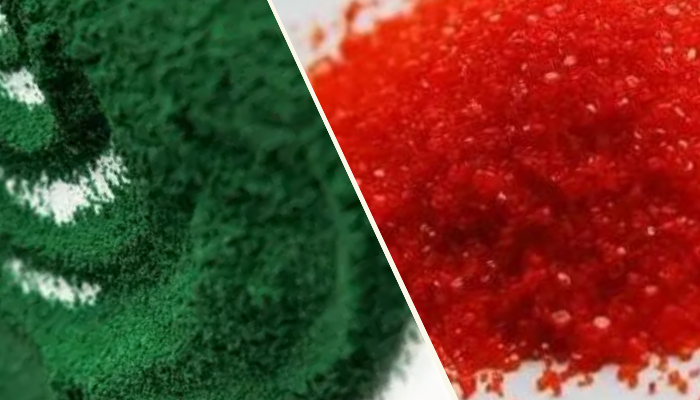
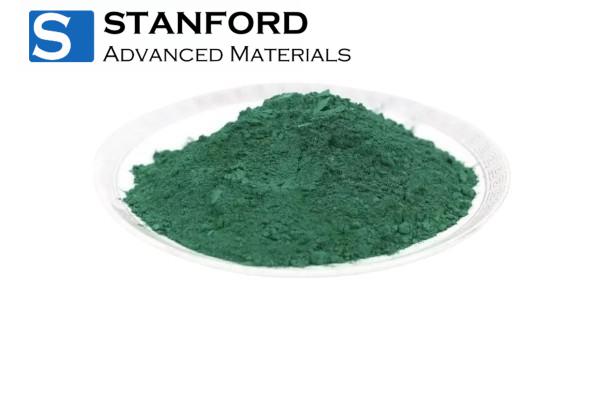
Dark green or bright green amorphous powder
|
Dark red or purple-red flaky or needle-like crystals
|
|
Solubility
|
Insoluble in water, ethanol, acetone, acids, and alkalis
|
Highly soluble in water, forming chromic acid (H₂CrO₄); soluble in ethanol and ether
|
|
Melting Point
|
Approx. 2435°C
|
Approx. 197°C
|
|
Toxicity
|
Low toxicity; generally considered stable and relatively safe
|
Highly toxic, strong oxidizer, highly corrosive, confirmed human carcinogen
|
3. Chemical Properties
|
Property
|
Chromium Oxide
|
Chromium Trioxide
|
|
Acidity/Alkalinity
|
Amphoteric, slightly basic; soluble in strong acids to form Cr³⁺ salts, and in strong alkalis to form [Cr(OH)₄]⁻ or [Cr(OH)₆]³⁻
|
Acidic oxide; anhydride of chromic acid; reacts with water to form chromic acid and dichromic acid
|
|
Redox Properties
|
Very stable; a stable oxide of chromium, often used as an inert material
|
Extremely strong oxidizing agent; may react violently or ignite upon contact with organic substances (e.g., alcohol, sugar)
|
|
Thermal Stability
|
Stable at high temperatures, does not decompose easily
|
Decomposes above its melting point to form chromium oxide (Cr₂O₃) and oxygen
|
4. Preparation Methods
|
Chromium Oxide
|
Chromium Trioxide
|
|
Heating potassium dichromate with sulfur for reduction.
Thermal decomposition of chromium hydroxide or ammonium dichromate.
|
Reaction of sodium dichromate with concentrated sulfuric acid:
Na₂Cr₂O₇ + 2H₂SO₄ → 2CrO₃ + 2NaHSO₄ + H₂O
|
5. Storage
|
Chromium Oxide
|
Chromium Trioxide
|
|
Store in a sealed container, protect from dust. General protection is sufficient.
|
Must be stored sealed, protected from moisture, and isolated. It must not be stored with organic substances, reducing agents, or flammable materials. Strict protective measures are required during handling (acid-resistant gloves, goggles, respirator).
|
For more information about metal oxides, please view Stanford Advanced Materials (SAM).
Key Differences
1. Trivalent Inertness vs. Hexavalent Reactivity
That is the most basic distinction, determining every other property. Chromium in chromium oxide (Cr₂O₃) is in the +3 oxidation state, one of the most stable states of chromium in nature. The +3 state has a stable electronic configuration, and hence chromium oxide is chemically very stable and inert, with little tendency to undergo redox reactions. In contrast, chromium in chromium trioxide (CrO₃) is in the +6 oxidation state. This is a high-energy, unstable state with a strong tendency to gain electrons and return to the more stable +3 state. Hence, chromium trioxide is an extremely strong oxidizing agent and highly reactive.
2. Essential Trace Element vs. Highly Toxic Carcinogen
Trivalent chromium is actually an essential nutrient for the human body, as it helps with glucose metabolism. Because of this, industrial use of chromium oxide is generally regarded as low-risk. The primary hazard it presents is physical irritation from inhaling its dust. The hexavalent chromium ion in chromium trioxide, CrO₃, however, is highly corrosive, sensitizing, mutagenic, and a known carcinogen. It can cross cell membranes and oxidize intracellular components to result in irreversible DNA damage. It presents a great threat both to the environment and human health and is strictly regulated as a hazardous chemical. Health problems in residents associated with the 2000 movie Erin Brockovich were due to hexavalent chromium.
3. Amphoteric & Slightly Basic vs. Strongly Acidic
They show absolutely different acid-base behaviors. The chromium oxide Cr₂O₃ is amphoteric with a slight basic bias; it reacts with strong acids to yield chromium (III) salts and dissolves in strong alkalis to form chromites. This amphoteric nature gives it usefulness in specific catalytic reactions. On the other hand, chromium trioxide, CrO₃, is a typical acidic oxide. It reacts immediately with water to form the strong acid—chromic acid (H₂CrO₄)—hence its name "chromic anhydride." Both the compound itself and its aqueous solutions are highly acidic.
4. Green, Insoluble Solid vs. Red, Soluble Crystals
The differences in macroscopic physical properties directly reflect their internal structures. Chromium oxide (Cr₂O₃) appears dark green, is stable in texture, and is insoluble in water and common solvents. This good stability and color classify it as a good inorganic green pigment, chrome green. However, chromium trioxide, CrO₃, is not green, but it is dark red or purple-red. It adopts a crystalline form, being very deliquescent, easily dissolving in water with the development of considerable heat during its dissolution. This property also dictates that it must be stored strictly sealed and protected from moisture.
5. Pigment & Abrasive Material vs. Oxidizing & Plating Agent
Based on all the above differences, their industrial applications are entirely distinct. Chromium oxide (Cr₂O₃) is primarily used for its stability, color, and hardness. Its core uses are as a pigment, abrasive, and refractory material. On the other hand, chromium trioxide (CrO₃) is used entirely for its strong oxidizing power and acidity. Its main uses are in electroplating, passivation of metals, and as a basic chemical raw material in the manufacture of other chromium compounds.
Summary
These two compounds can be considered to represent the two extremes of chromium chemistry: one is an inert, harmless material while the other is a very reactive and dangerous chemical. This difference between them is rooted in the basic peculiarity of the compounds of the +3 and +6 oxidation states.