What Is Spherical Tungsten-Molybdenum Alloy Powder?
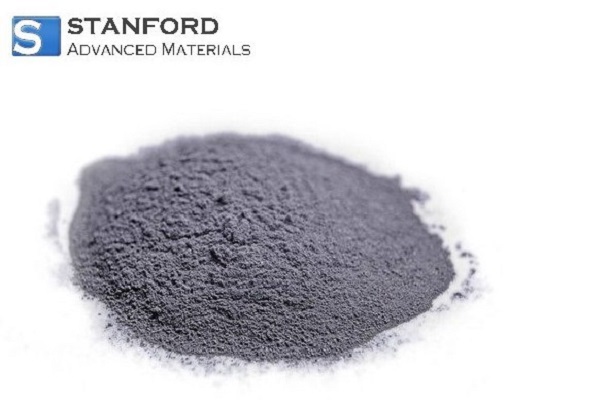
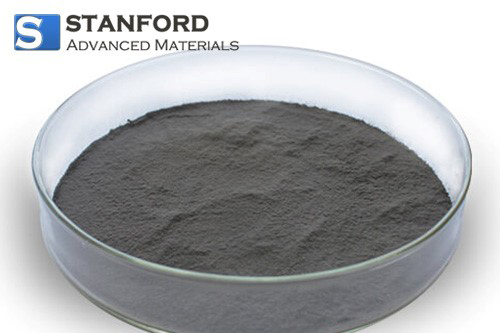
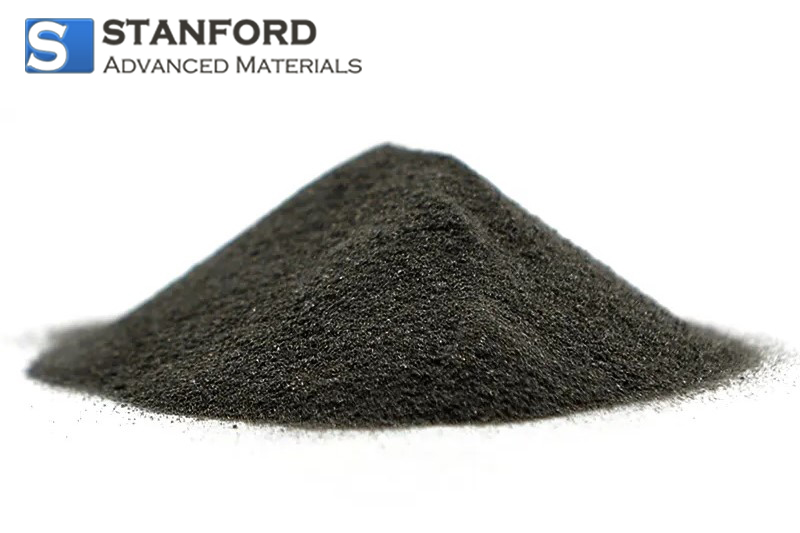
This powder is an alloy made mainly from tungsten and molybdenum, two refractory metals. Its common compositions include W-50Mo and W-30Mo.
The spherical tungsten molybdenum alloy powder is produced using advanced methods like plasma spheroidization. The process involves these steps:
- Tungsten and molybdenum powders are mechanically mixed in a set ratio.
- The mixture is turned into spherical precursor powder via spray granulation.
- The precursor powder is sintered.
- Finally, plasma spheroidization is applied to obtain the finished spherical powder.
This method gives the powder a narrow particle size distribution. As a result, it flows well and is easy to form.
Key Properties:
- Very high melting point: Tungsten has the highest melting point of all metals at 3,410°C, and molybdenum melts at 2,620°C, ranking 5. Their alloy melts at a temperature between these two, which is still much higher than most metals.
- High-temperature strength and creep resistance: Even above 1,000°C, the alloy remains strong and resists deformation.
- Good thermal and electrical conductivity: This helps spread heat quickly at high temperatures, preventing localized overheating.
- Low thermal expansion: It expands and contracts very little with temperature changes, so it keeps its shape well under repeated heating and cooling.
- Excellent spherical powder properties: The spherical particles flow smoothly and pack tightly. This enables even layering and highly dense parts in processes such as hot isostatic pressing, laser cladding, or 3D printing.
Main Applications
- Aerospace: Used in key high-temperature parts such as rocket nozzle throats and turbine guide vanes.
- Advanced electronics and semiconductors: Used in thermal management, like heat sinks for high-power chips, and as sputtering targets for high-performance electronics.
- High-temperature furnaces and sintering equipment: Used for heating elements, heat shields, and sintering supports in vacuum furnaces above 1,600°C.
- Surface engineering and coatings: Applied via plasma spraying to create wear-resistant, high-temperature coatings on surfaces.

How Does Tungsten Affect the Properties?
Tungsten is the key element for high-temperature performance. First, because tungsten has such a high melting point, it raises the overall melting point of the alloy. This lets the material withstand extreme heat.
More importantly, tungsten strengthens the alloy through solid solution strengthening. When molybdenum atoms enter the crystal structure of tungsten, they cause lattice distortion. This distortion makes it harder for dislocations to move, which increases strength. So, more tungsten usually means better resistance to deformation and creep at high temperatures.
Tungsten also raises the recrystallization temperature. Metals that are shaped at high temperatures can soften when recrystallization occurs. With more tungsten, this softening happens at a higher temperature, so the alloy stays strong for longer.
How Does Molybdenum Affect the Properties?
Molybdenum helps optimize and balance the alloy’s properties. One important effect is that it improves ductility. Pure tungsten is brittle at room temperature and hard to machine. Adding molybdenum lowers the temperature at which the material becomes ductile, so it is tougher and easier to work with across a wider temperature range.
Molybdenum also affects the microstructure. During production and heat treatment, it refines the grain size and keeps grains from growing too large at high temperatures. Smaller grains increase strength and also improve toughness. This grain refinement is another reason the alloy performs well under heat.
In short, molybdenum keeps the high-temperature advantages of tungsten while making the material easier to process and more durable. This makes W-Mo alloy a well-balanced choice for high-temperature applications.
Frequently Asked Questions
Q1: Why is spherical powder needed?
Irregular powder may work for general uses, but spherical powder is essential for precision processes like 3D printing. It flows better, forming uniform and dense layers that produce parts with fewer defects and higher density. Spherical powder also packs more tightly, which helps make denser sintered parts in traditional methods.
Q2: How is the tungsten-molybdenum ratio decided? Is more tungsten better?
Not necessarily. More tungsten increases melting point, strength, and density, but it also makes the material more brittle, harder to machine, and more expensive. More molybdenum improves toughness, thermal shock resistance, and processability. The final ratio is chosen based on the needs of the application.
Q3: What is the advantage of W-Mo alloy powder over pure tungsten or molybdenum?
It offers a balance of properties. Pure tungsten handles the highest temperatures but is brittle and hard to process. Pure molybdenum is easier to work with but cannot match tungsten’s heat resistance. The W-Mo alloy keeps the high-temperature strength of tungsten while gaining better toughness and workability from molybdenum. This makes it ideal for complex parts and those exposed to thermal shock.







-Alloy-Powder.jpg)