Alumina and zirconia powders are both very important coating materials. Each has its own advantages and is used in different situations.
Alumina coatings are harder with excellent wear resistance. They hence work well where high hardness and abrasion resistance are needed.
Zirconia coatings are tougher, providing better thermal insulation. They also resist higher temperatures. This makes them the preferred choice for high-load and high-temperature environments.
Alumina and Zirconia Coatings: Properties Comparison
Both materials have their own strengths and weaknesses.
1. Hardness and Wear Resistance
Alumina coatings (Al₂O₃) are very hard, and their Mohs hardness is about 9. They also have strong wear resistance, and they can handle friction and mechanical wear for a long time. This is why they perform so well in industrial cutting tools. They are also ideally suited for wear-resistant parts and are ideal for surface protection that needs high hardness.
Zirconia coatings (ZrO₂) are a bit less hard. Their Mohs hardness is about 8–8.5, but they are tougher. They resist impact better than alumina and also have higher fracture toughness, so they suit environments with impact or high stress.
2. Toughness and Impact Resistance
Alumina coatings resist high temperatures well, and data shows they can withstand up to about 1500°C. They conduct heat relatively well, which makes them suitable for general industrial furnaces. They also work on heat treatment equipment.
Zirconia coatings resist even higher temperatures, with the potential to endure over 2500°C. And they insulate heat better, offering lower thermal conductivity. This helps protect substrates from high-temperature damage.
3. High-Temperature and Thermal Insulation Performance
Alumina coatings offer good high-temperature resistance, withstanding temperatures up to about 1500°C, and have relatively high thermal conductivity, making them suitable for general industrial furnaces or heat treatment equipment.
Zirconia coatings provide superior high-temperature resistance, enduring temperatures exceeding 2500°C, along with better thermal insulation and lower thermal conductivity, effectively protecting substrates from high-temperature damage.
4. Electrical Insulation and Thermal Conductivity
Alumina coatings are excellent electrical insulators, and they are also chemically very stable. Zirconia does not conduct heat well, but this makes it a better thermal insulator. It keeps its mechanical properties even at high temperatures.
5. Corrosion Resistance and Chemical Stability
Alumina has better performance in a strong acid environment than zirconia, with quite good corrosion resistance. At the same time, zirconia has high-temperature corrosion and mechanical wear resistance, thus prolonging its service life under strongly corrosive or abrasive working conditions.
There are also very distinct differences in cost and processing. The raw materials for alumina coatings are plentiful and cheap, and the process is readily scaled up. In contrast, the raw materials for zirconia are more expensive, and processing is more complicated, especially since the addition of stabilizers is required to control the crystal phases. As a result, zirconia coatings typically cost at least 1.5 times more than alumina coatings.
Summary: Alumina vs. Zirconia Coatings Comparison
|
Property
|
Alumina Coating
|
Zirconia Coating
|
|
Hardness
|
High (Mohs ~9)
|
Medium (Mohs 8-8.5)
|
|
Toughness
|
Relatively low
|
High (excellent impact resistance)
|
|
High-Temperature Resistance
|
Withstands 1500°C
|
Withstands over 2500°C
|
|
Thermal Conductivity
|
Relatively high
|
Low (good thermal insulation)
|
|
Electrical Insulation
|
Excellent
|
-
|
|
Corrosion Resistance
|
Good acid resistance
|
Good high-temperature corrosion resistance
|
|
Cost
|
Abundant materials, lower cost
|
Expensive materials, ≥1.5× higher price
|
|
Processing Difficulty
|
Easy to scale up
|
Complex process (requires stabilizers)
|
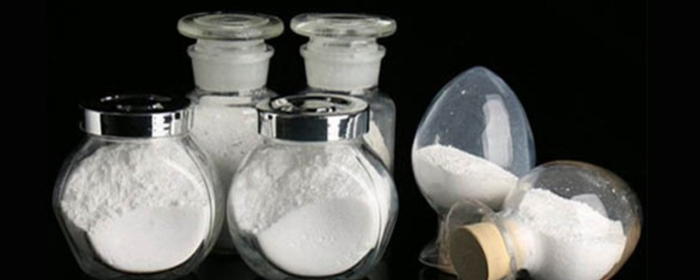
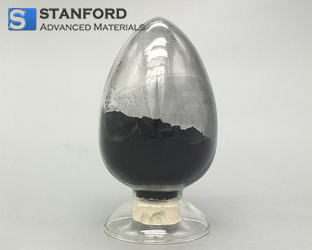
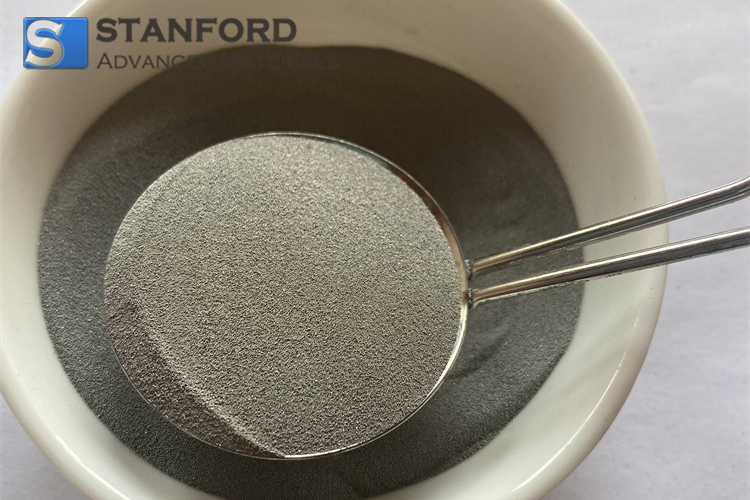
Stanford Advanced Materials (SAM) offers high-purity alumina and zirconium oxide powders.
Alumina and Zirconia Coatings: Application Comparison
Each coating type works best in different situations. Alumina is better for wear resistance, corrosion resistance, and electrical insulation. In contrast, zirconia is suitable for toughness, thermal insulation, and thermal shock resistance.
|
Coating Type
|
Applicable Scenarios
|
|
Alumina
|
Industrial surface protection requiring high hardness and wear resistance
|
|
Catalyst supports, ceramic packaging
|
|
High-temperature furnace permeation components
|
|
Zirconia
|
High-impact and high-toughness applications
|
|
High-temperature thermal insulation components
|
|
Aerospace and high-load chemical equipment
|
|
Grinding jars, bearing balls, valves, and pump parts
|
Conclusion
You should choose the coating based on your specific needs. If you need high hardness and wear resistance, and want to save cost, pick alumina. Alternatively, if you need toughness, thermal insulation, high-temperature resistance, or high-load impact performance, consider zirconia. By carefully looking at the performance, environment, and cost, you can find the best coating materials to ensure the best results for a long time.







 Powder (1).jpg)