High-performance alloy manufacturing forms the base of aerospace, energy, and high-end equipment. Niobium powder is an important alloying element in the making of these alloys. Mainly, it is incorporated through powder metallurgy processes and hence plays a vital role in improving the overall performance of alloys.
The Core Role of Niobium
How does niobium improve alloys? Briefly, niobium improves alloy strength by forming strengthening phases, providing solid solution strengthening, and improving stability.
Niobium is one of the most potent carbide and nitride formers. Within alloys, it bonds with carbon and/or nitrogen to create extremely stable, fine nanoscale precipitates such as NbC, NbN, or Nb(C,N). These particles effectively pin grain boundaries and impede dislocation movement, thereby significantly increasing the alloy's strength, hardness, and creep resistance. This allows high-performance alloys to maintain structural integrity under high-temperature and high-pressure conditions.
Besides that, lattice distortion due to the dissolution of niobium atoms into a matrix strengthens the matrix itself.
The addition of niobium also promotes the formation of a denser, more stable oxide film, such as a Cr₂O₃-rich layer, on the surface of an alloy, which significantly improves its durability in harsh high-temperature and corrosive environments.
Advantages of Niobium Powder: Why Choose the Powder Form?
While it is possible to add niobium in the form of metal ingots, niobium powder offers more significant advantages for the manufacturing of high-performance alloys.
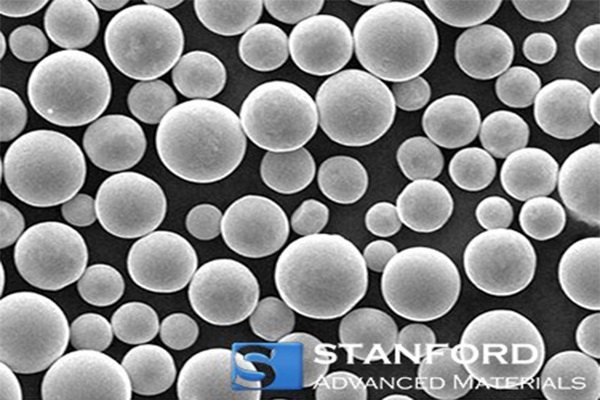
In conventional melting processes, the relatively high density of niobium often results in an inconsistent distribution and segregation in the melt. Conversely, by using niobium powder, uniform mixing at a microscale is effectively achieved with the matrix powders, such as nickel, cobalt, or iron, through powder metallurgy techniques, thus assuring consistent final alloy composition and stable performance.
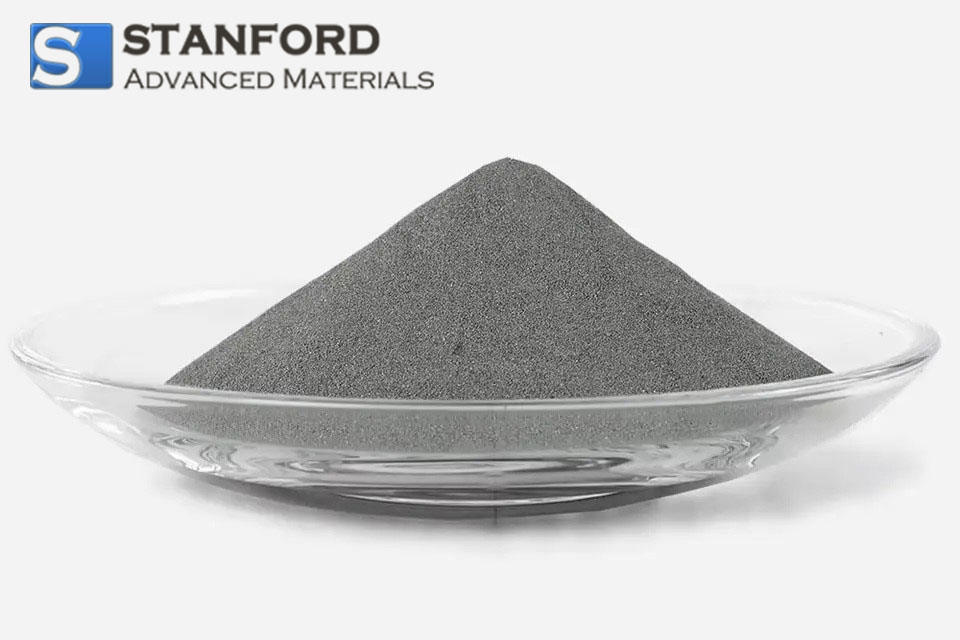
Pre-alloyed niobium powder is made using rapid solidification technology. This process gives it a naturally fine internal structure. Because of this, it's perfect for creating alloys that have uniform, fine grains. And these fine-grained alloys end up with much better mechanical properties.
Which niobium powders can be used as alloy additives?
Using Niobium Powder as an Alloying Additive
Thanks to these advantages, alloys strengthened with niobium powder perform really well in many demanding applications.
Let's look at aerospace as an example. More than 50% of the performance gains in modern jet engines actually come from material improvements. The key materials here are nickel-based superalloys. They're used for critical hot-section parts like turbine disks and blades.
In these superalloys, niobium teams up with elements like aluminum and titanium. Together, they form what we call γ' and γ'' strengthening phases. This teamwork significantly improves the material's strength at high temperatures. It also boosts creep resistance and makes the material more resistant to fatigue.
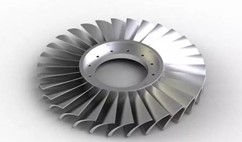
turbine blades made of high-performance alloys
In the energy and industrial sectors, conditions can be really tough. Take oil and gas extraction, for example. These environments are often highly acidic and demand materials that are both strong and highly corrosion-resistant. This is where high-performance stainless steels and nickel-based alloys with niobium come in. The niobium in them provides carbide precipitation strengthening and a stabilizing effect, which is exactly what's needed to handle these extreme challenges.

Offshore oil extraction
Then there are specialty materials, like the C-103 and C-300 alloy families. These alloys are actually based on niobium. They offer a great combination of high-temperature strength, toughness even in low temperatures, and solid corrosion resistance. Because of this, they're widely used in aerospace and chemical processing. Of course, to produce these advanced alloys, you need to start with high-quality niobium powder.
Summary
In conclusion, niobium powder is not merely a simple additive. It is a key raw material enabling precise control of alloy composition, microstructural refinement, and performance optimization. The powder form perfectly aligns with the requirements of modern powder metallurgy and additive manufacturing technologies. This allows alloys to achieve an optimal balance between strength, toughness, and environmental durability.