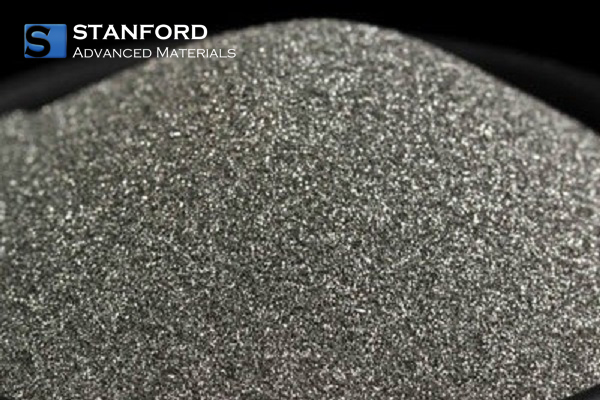
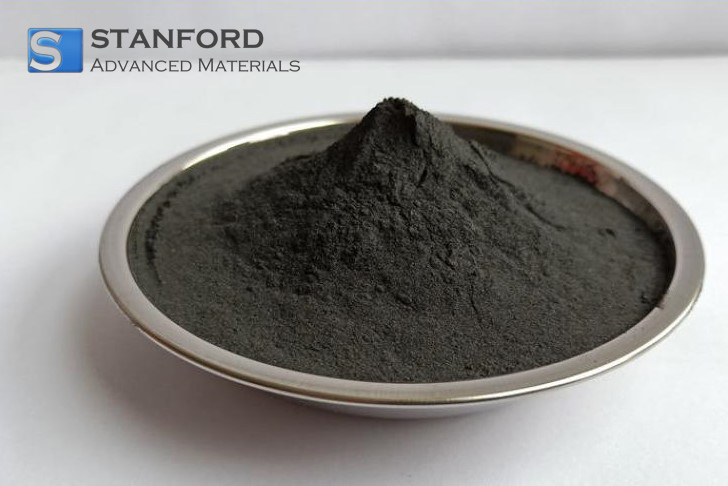
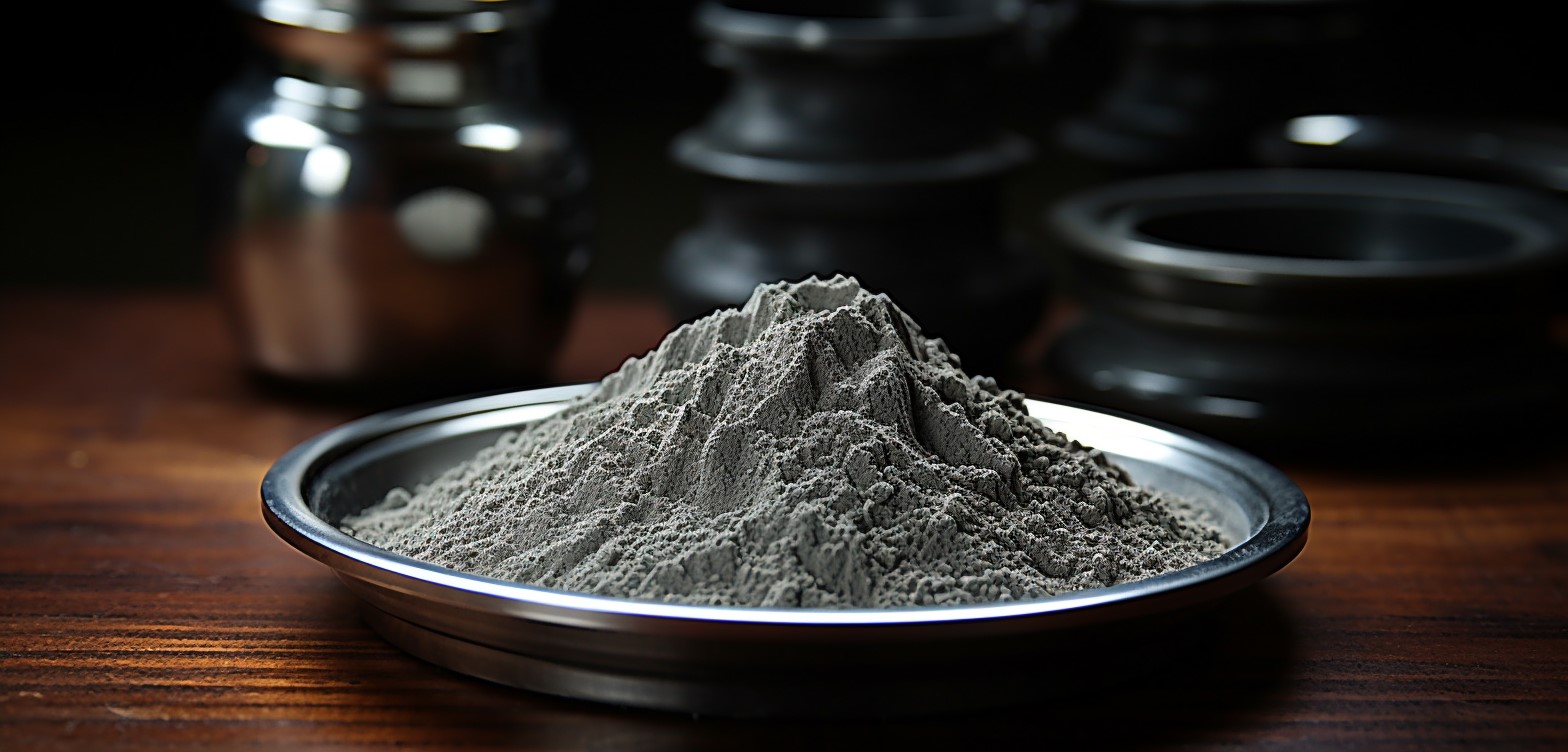
Among superconducting materials, NbTi (niobium-titanium, Tc=9.5K) and Nb₃Sn (niobium-tin, Tc=18K) have been successfully commercialized. NbTi superconducting wire alone accounts for over 90% of the entire superconducting materials market. This wide application is due to their excellent properties that depend on an important raw material: high-purity niobium powder. In fact, the quality of niobium powder directly determines the properties of the final superconducting wire.
Why Niobium Powder
Niobium is the core element in practical superconducting materials. First, niobium itself is a medium-temperature superconductor with a relatively high transition temperature. More importantly, forming a solid solution alloy with titanium (NbTi) or reacting with tin to form an intermetallic compound (Nb₃Sn) results in outstanding superconducting properties. This is especially true for its critical current density under high magnetic fields. NbTi alloy dominates applications in medium magnetic fields (< 10 T), thanks to its excellent ductility and stability. Nb₃Sn, with its higher superconducting transition temperature and upper critical field, is the primary choice for high-field applications (> 10 T). The production of both materials starts with high-purity niobium powder.
Table 1: Applications of NbTi and Nb₃Sn Superconducting Wires
|
Application
|
Introduction
|
Material Used
|
|
MRI
|
MRI is a medical imaging technique. It uses magnetic fields and radio waves to create detailed images of internal organs and soft tissues.
|
NbTi
|
|
MCZ
|
MCZ is an advanced process for growing high-quality, large-diameter monocrystalline silicon in strong magnetic fields. It is mainly used for manufacturing high-end chips.
|
NbTi
|
|
NMR
|
NMR is an analytical chemistry technique. It determines molecular structure and composition. It is widely used in chemistry, pharmaceuticals, and other fields.
|
Primarily Nb₃Sn, some NbTi
|
The Role of Niobium Powder in NbTi Alloy Wire
NbTi superconducting wire is typically made using the "rod-in-tube" method. Mixing high-purity niobium powder with high-purity titanium powder, pressing into shape, or inserting a niobium rod directly into a titanium tube is followed by a series of highly complicated extrusion, drawing, and heat treatment processes.
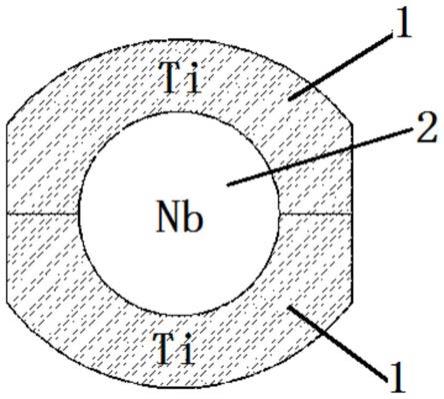
Fig 1. rod-in-tube method for NbTi Alloy Wire
In this process, the high-purity niobium powder mainly plays a role in ensuring the uniformity and purity of the superconducting phase. Any trace interstitial impurities, such as carbon (C), oxygen (O), or nitrogen (N), are inactive pinning centers. They can seriously obstruct the flow of supercurrent, hence leading to a steep drop in the critical current density. High-purity niobium powder ensures extremely clean starting materials. It lays a solid foundation for subsequently forming uniform, fine α-Ti precipitates. Only a pure and compositionally uniform NbTi matrix can precipitate ideal pinning centers with the right size and distribution during heat treatment. This gives the wire its strong current-carrying capacity.
The Role of Niobium Powder in Nb₃Sn Alloy Wire
Unlike NbTi alloy, Nb₃Sn superconducting wire is a brittle compound formed by a solid-state diffusion reaction. The main manufacturing techniques are the Bronze Process and Internal Tin Process. The core idea for both is to use niobium (or a niobium-tantalum alloy) as a precursor. This precursor reacts with the surrounding copper-tin bronze or pure tin at high temperatures. Finally, an Nb₃Sn layer forms on the surface of the niobium filaments. The bronze process utilizes niobium rods made from high-purity niobium powder, whereas the internal tin process directly employs niobium powder.
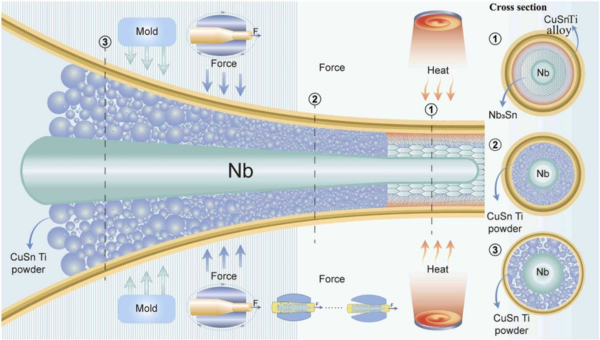
Fig 2. Bronze Process for Nb₃Sn Alloy Wire[1]
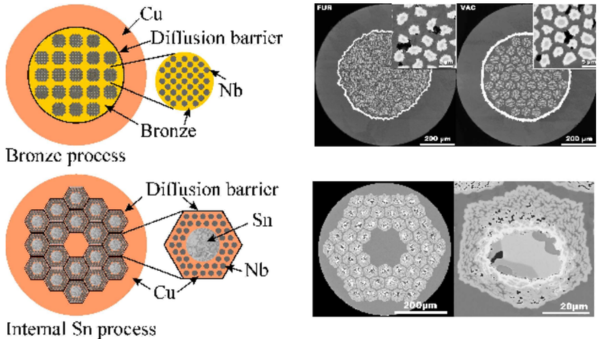
Fig 2. Bronze Process and Internal Tin (Sn) Process[2]
Here, the quality of the high-purity niobium powder directly decides the quality of the formed Nb₃Sn layer and the final wire performance.
- Niobium rods or cores made from sintered high-purity, high-surface-area niobium powder have more controllable grain structure and microscopic defects. During the subsequent reaction diffusion with tin, this ensures the generated Nb₃Sn layer is uniform in thickness and dense. Any impurities will alter the local diffusion rate. This causes an uneven reaction layer and creates weak links, degrading the overall superconducting performance.
- The superconducting properties of Nb₃Sn depend strongly on its grain size. Finer grains mean more grain boundaries. These grain boundaries are the most effective flux pinning centers in Nb₃Sn. Using a niobium source made from high-purity powder promotes the formation of a fine-grained Nb₃Sn layer. Impurity elements often cause abnormal grain growth. This creates a coarse grain structure, reduces the number of effective pinning centers, and severely harms the wire's current-carrying capacity in high magnetic fields.
- To further enhance the performance of Nb₃Sn in high fields, tantalum (Ta) or titanium (Ti) is often added to the niobium. High-purity niobium powder provides a pure base for this alloying. It allows for precise and uniform addition of the alloying elements. This enables "microscopic tuning" of the superconducting properties.
Summary
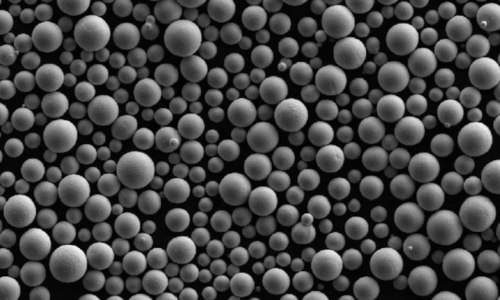
As superconducting applications advance towards higher magnetic fields and more compact devices, the performance requirements for NbTi and Nb₃Sn wires are becoming increasingly strict. This, in turn, drives the pursuit of extremely high quality in high-purity niobium powder. Modern high-performance superconducting wires typically require niobium powder with a purity of 99.9% (3N) or even 99.99% (4N) and above. There are also very strict limits on specific harmful impurity elements. Furthermore, the particle size distribution, morphology, and sintering activity of the niobium powder directly affect the density and uniformity of the subsequently processed material. These are all critical factors determining final wire performance. Stanford Advanced Materials (SAM) is a global supplier, offering high-purity (≥99.9%) niobium powder.
[1] Zhe Zhang, Yuyao Lei, Yuetong Yan, Ruofan Fei, The microstructure evolution mechanism of Nb3Sn/Cu superconducting wire prepared by a novel method: Powder bronze method, Journal of Alloys and Compounds, Volume 1037, 2025, 182519, ISSN 0925-8388, https://doi.org/10.1016/j.jallcom.2025.182519.
[2] Bottura, L. & Godeke, A.. (2013). Superconducting materials and conductors: Fabrication and limiting parameters. 10.1142/9789814449953_0002.