Nano nickel oxide is a functional material with wide application prospects. The unique nano-effects give it excellent properties in areas like battery electrodes, catalysts, gas sensors, and ceramic pigments.
What is Nano Nickel Oxide?
Nano nickel oxide is just one common p-type semiconductor material that has excellent thermal sensitivity, gas sensitivity, and catalytic properties. Because of its tiny size and special properties, it displays a wide range of promising applications.
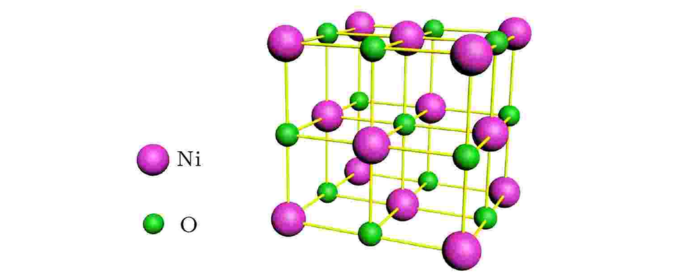
Generally, nickel oxide mainly exists in two forms: nickelous oxide (NiO) and nickelic oxide (Ni₂O₃).
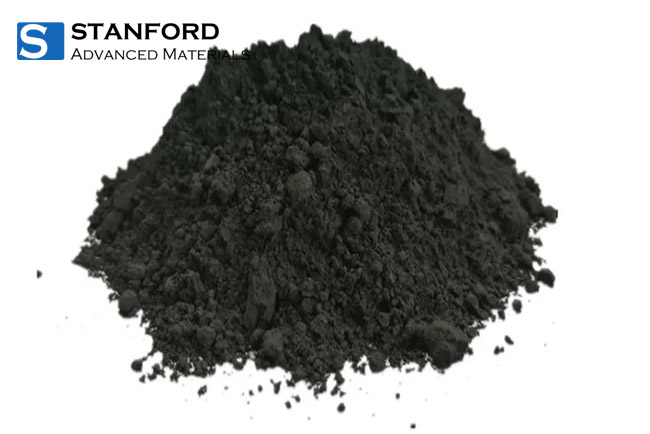
NiO appears as green-black cubic crystals. It dissolves in acid and ammonia water, and its color turns yellow when heated. On the other hand, Ni₂O₃ is a dark gray powder, and it will decompose into NiO and oxygen at high temperatures.
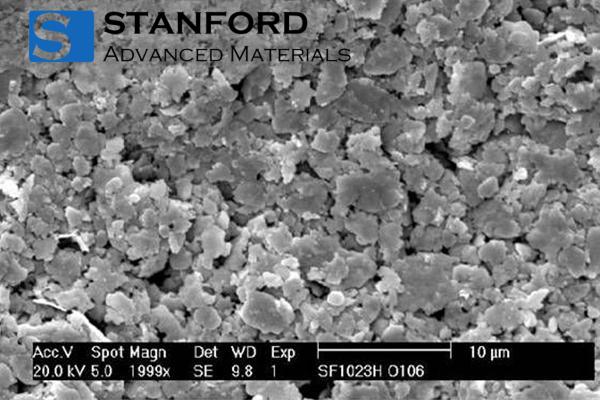
When the particle size is decreased to the nanoscale, nickel oxide exhibits special properties, like surface effects, small size effects, quantum size effects, and macroscopic quantum tunneling effects. These properties give it wide application potential in catalysis, sensing, and energy materials.
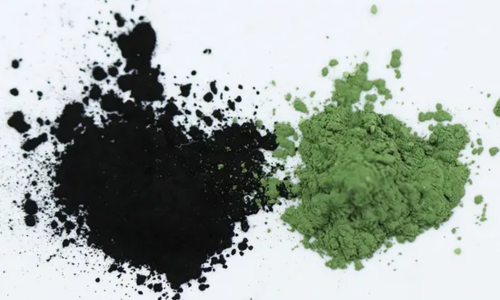
Stanford Advanced Materials (SAM) offers green nickel oxide powder. It has a purity greater than 99.9% and a particle size below 50nm.
2. How to Make Nano Nickel Oxide
The production process significantly affects the properties of nano nickel oxide. And common methods include chemical precipitation, alcohol solvent extraction, and low-heat solid-phase reactions. Reaction conditions must be strictly controlled to obtain a product with a uniform particle size and good dispersion.
1. Chemical Precipitation Method
The raw materials usually include nickel sulfate or nickel nitrate, with ammonium bicarbonate or urea as the precipitating agent. Uniform precursor precipitation can be achieved by controlling the reactant ratio, solution pH, temperature, and additive type. For example, using a nickel sulfate to ammonium bicarbonate molar ratio of 1:4, Tween-80 at 1.25% of solution volume, a reaction temperature of 90°C, and a calcination temperature of 500°C yields nickel oxide particles sized 38–60 nm. The yield reaches 79%. The homogeneous precipitation further improves product uniformity. Under suitable conditions, spherical nanoparticles with an average size of about 15 nm can be produced.
2. Alcohol Solvent Method
This method uses organic alcohols as the reaction medium to overcome particle agglomeration in traditional aqueous methods. It effectively reduces non-bridging hydroxyl groups on particle surfaces, and also lessens capillary contraction during drying. Consequently, it significantly improves product dispersion.
During heating, the adsorbed alcohol is gradually removed, and CO₂ is released. High-purity, low-agglomeration NiO powders finally form.
3. Low-Heat Solid-Phase Method
It involves preparing the precursor via a solid-phase grinding reaction. The precursor is then calcined to obtain nickel oxide nanoparticles. Grinding time, calcination temperature, and raw material ratio are key factors affecting the product properties. Proper grinding improves reaction uniformity. A suitable calcination temperature helps form nanoparticles with a complete crystal structure and an appropriate particle size.
Applications of Nano Nickel Oxide
1. Catalyst
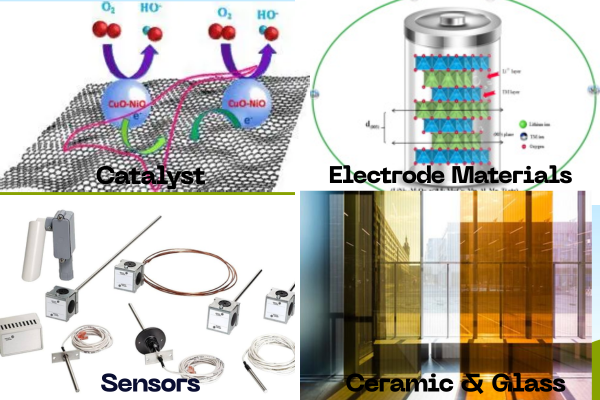
The 3d orbital structure of Ni²⁺ in nano-NiO gives it good adsorption and activation capabilities for oxygen and other reducing gases. It is widely used in hydrocarbon conversion, natural gas catalytic combustion, and wastewater treatment. For example, in NiO/CuO–ZrO₂ composite catalysts, NiO enhances the material's high-temperature stability. In carbon nanotube synthesis, the NiO/SiO₂ catalyst effectively increases yield and controls tube diameter distribution. Furthermore, NiO can serve as a photocatalyst for degrading organic dyes.
2. Battery and Electrode Materials
In storage batteries, nano-nickel oxide electrodes show better charge-discharge performance than ordinary materials. Their small size effect increases the specific surface area and porosity of the active material. This favors electron and ion transport, thereby extending battery life. Studies also show that granular NiO has higher specific capacitance than needle-shaped NiO. It also offers better electrochemical performance.
- Dye-Sensitized Solar Cells (DSSC): NiO is a p-type semiconductor with high stability and a wide bandgap. It is used as a cathode material in DSSCs, which helps improve the efficiency and stability of the batteries.
- Electrochemical Capacitors: Nano-NiO serves as an electrode material in capacitors with high specific capacitance. For example, urchin-like NiO can reach 290 F/g and also maintains good performance over many cycles. It is a promising low-cost material. Additionally, composites like lithium nickel cobalt oxide (LiNiₓCo₁₋ₓO₂) combine the benefits of nickel and cobalt materials. They offer high capacity, high voltage, and long life, widely used in new types of batteries.
3. Sensors
Nano-NiO is used in gas sensors. It can detect formaldehyde, carbon monoxide, and hydrogen. These sensors respond well and are stable, hence suitable for environmental monitoring and industrial safety.
4. Ceramic and Glass Industry
Adding a small amount of nano-NiO (such as 0.02%) to ceramics can improve their impact strength and enhance electrical properties like piezoelectric and dielectric performance. In glass manufacturing, NiO is used as a colorant. Given that it produces brown transparent glass and absorbs ultraviolet light, it is widely used in architectural and decorative glass.
Conclusion
Nano Nickel oxide is an important functional nanomaterial. It shows broad application prospects in catalysis, sensing, energy, and material modification.