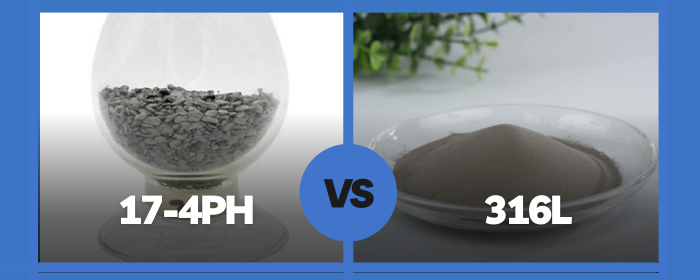
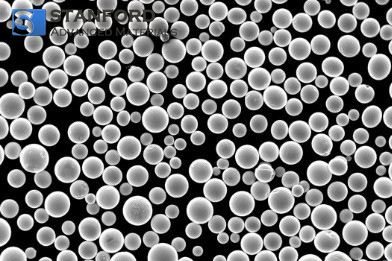
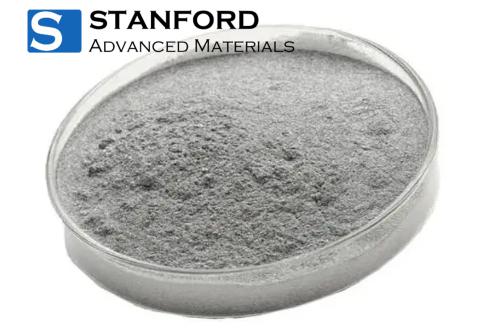
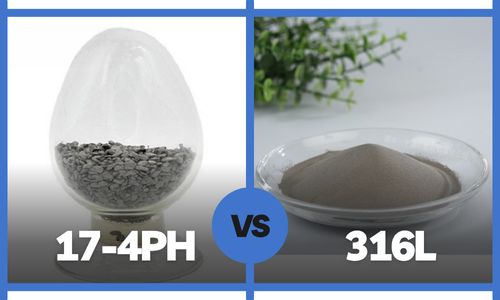
In metal additive manufacturing (3D printing), stainless steel powders are widely used. They offer good strength, corrosion resistance, and printability. Among them, 17-4PH and 316L are two common grades, but their properties are very different.
Brief Overview: 316L and 17-4PH Stainless Steel Powders
We have discussed these powders before, and here is a simple recap.
316L Stainless Steel Powder
- System Type: Austenitic stainless steel.
- Key Feature: It is a chromium-nickel-molybdenum alloy, known for excellent corrosion resistance.
- Key Composition: High chromium (~17%), high nickel (~12%), and added molybdenum (~2.5%). Low carbon content is crucial, because it prevents chromium carbide formation at grain boundaries. This avoids "sensitization" and provides great resistance to intergranular corrosion.
- Microstructure: It has a stable face-centered cubic austenitic structure at room temperature, and it is generally non-magnetic or weakly magnetic.
17-4PH Stainless Steel Powder
- System Type: Precipitation-hardening martensitic stainless steel.
- Key Feature: It can achieve high strength and hardness through simple heat treatment (aging).
- Key Composition: It is a chromium-nickel-copper alloy, with about 17% chromium, 4% nickel, and about 3% copper. Among copper is the key precipitation strengthening element.
- Microstructure: The as-printed state is usually a soft, supersaturated martensite or austenite. After specific heat treatment, fine ε-Cu particles precipitate. Then this creates strong precipitation strengthening, and greatly increases strength and hardness.
17-4PH and 316L Stainless Steel Powder: Mechanical Properties Comparison
This is where the two materials differ most.
|
Property
|
17-4PH (Aged H900)
|
316L
|
|
Tensile Strength
|
Very High: ≥ 1310 MPa
|
Medium: ≥ 485 MPa
|
|
Yield Strength
|
Very High: ≥ 1170 MPa
|
Medium: ≥ 170 MPa
|
|
Elongation
|
Medium: ≥ 10%
|
Excellent: ≥ 40%
|
|
Hardness
|
Very High: HRC ≥ 40
|
Low: HRB ≈ 70 (~HRC 15)
|
|
Key Characteristics
|
High Strength, High Hardness
|
High Toughness, Excellent Ductility
|
17-4PH stainless steel powder is the go-to material for superior strength and hardness. After aging treatment, it achieves more than triple the strength of 316L, making it ideal for high-load, high-stress, and wear-resistant applications.
On the other hand, 316L stainless steel powder is renowned for its outstanding toughness and ductility. It sustains considerable plastic deformation before fracturing, which makes it the superior choice for applications demanding impact resistance, energy absorption, or structural flexibility.
17-4PH and 316L Stainless Steel Powder: Corrosion Resistance Comparison
Corrosion resistance is not simple. It depends on the specific environment.
Generally, 316L stainless steel powder offers better broad-spectrum corrosion resistance than 17-4PH. Because its molybdenum (Mo) content greatly enhances resistance to chloride pitting and crevice corrosion. So, for marine environments, chemical processing, or media with halide ions, 316L is the more reliable choice.
In the age-hardened condition (especially H900), 17-4PH has better corrosion resistance than standard martensitic stainless steels, comparable to 304 stainless steel powder. However, it lacks molybdenum. So, its resistance to chloride pitting is weaker than 316L's. Also, its high strength can make it more susceptible to stress corrosion cracking in some environments.
Simply, for most chemical and marine environments, choose 316L. And for atmospheric environments, water vapor, and some non-oxidizing acids and salt solutions, properly heat-treated 17-4PH offers sufficient corrosion resistance while also meeting strength requirements.
17-4PH and 316L Stainless Steel Powder: Additive Manufacturing Process Characteristics
Both have good printability and low crack sensitivity. But their optimal printing parameters need separate optimization due to different compositions.
17-4PH stainless steel powder properties depend heavily on post-processing heat treatment. As-printed parts have mediocre properties. Aging treatment is essential to activate their ultra-high strength. This is a critical step in the process.
316L stainless steel powder usually does not require heat treatment to achieve satisfactory mechanical properties. Stress relief annealing might be used to reduce internal stresses. This mainly improves dimensional stability and toughness, not strength.
Summary
Choosing between 17-4PH and 316L is a trade-off between "strength" and "corrosion resistance/toughness".
- Choose 17-4PH when your design prioritizes handling very high loads, resisting deformation, or needing high wear resistance. Remember, its full potential requires precise aging heat treatment.
- Choose 316L when your design faces harsh chemical environments, or needs to withstand impact, bending, and prioritizes structural toughness.
Frequently Asked Questions about 17-4PH and 316L Stainless Steel Powders
1. Which has higher strength, 17-4PH or 316L?
17-4PH is much stronger. After aging, its strength is over three times that of 316L.
2. Which has better toughness, 17-4PH or 316L?
316L has much better toughness and ductility than 17-4PH. It can withstand greater plastic deformation.
3. Which one should I choose for marine environments?
316L is recommended. Its molybdenum content gives it significantly better resistance to chloride pitting than 17-4PH.
4. Does 17-4PH require heat treatment?
Yes. Aging heat treatment is mandatory to achieve its ultra-high strength. It's a key step.
5. Does 316L require heat treatment?
Usually not. Parts can be used directly after printing, or may only need stress relief annealing.
6. Which is more wear-resistant, 17-4PH or 316L?
17-4PH. Its high hardness after aging (HRC≥40) makes it significantly more wear-resistant than 316L.
7. Are they magnetic?
17-4PH (after aging) is martensitic and magnetic. 316L is austenitic and typically non-magnetic.
8. Is there a cost difference?
Powder costs are similar. But 17-4PH requires added heat treatment, making the total manufacturing cost slightly higher.
9. Can they be used for medical implants?
316L is a biocompatible material, often used for temporary implants and surgical tools. 17-4PH can also be used for some implants, but ensure it's a biocompatible version and in a specific heat-treated condition.
Reference:
3D Printing Metal Powder Series 2: Spherical 316L Stainless Steel Powder
Overview of 17-4PH Stainless Steel Powder