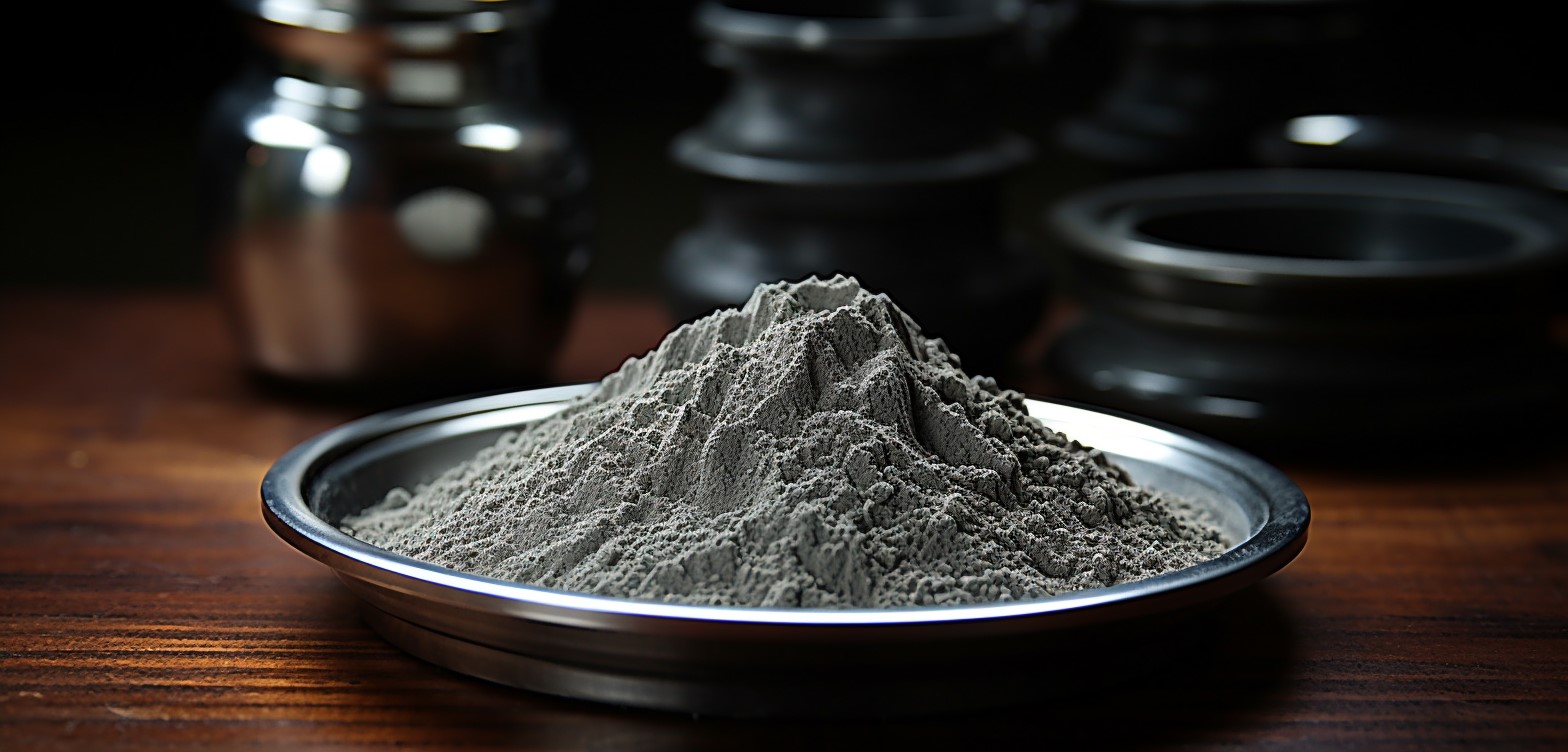
Magnesium oxide (MgO) is an important inorganic compound. It exists in powder form and quietly contributes its strength across many fields such as medicine, chemical engineering, ceramics, and more.
Although its chemical formula is simple, magnesium oxide can be divided into various types depending on production processes and purity levels. Different types of magnesium oxide have different applications.
We will focus on three types of magnesium oxide that play key roles in specific fields:
- Nano MgO, representing cutting-edge materials
- Fused Magnesia, serving as an industrial backbone
- Pharmaceutical-grade MgO, crucial for life and health
Nano Magnesium Oxide: High-Performance Material in the Micro-World
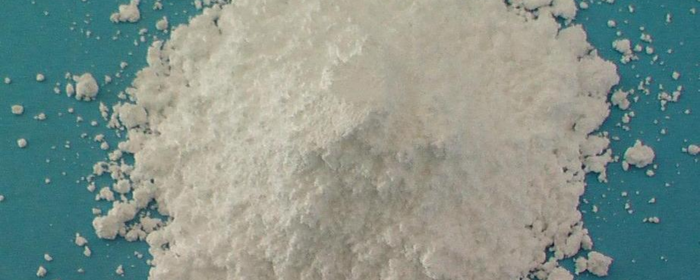
In appearance, nano magnesium oxide mostly presents as a white powder. It is odorless, non-toxic, and safe to use. Most importantly, its particle size reaches the nanoscale, with common specifications such as 20nm, 30nm, and 50nm. This extremely small particle size gives it an exceptionally large specific surface area. With the same weight, its contact area with other substances is much greater than that of ordinary magnesium oxide.
It is not simply obtained through traditional calcination processes. Instead, precise techniques such as sol-gel methods, chemical precipitation, or vapor deposition are required to control its size and morphology.
Key Characteristics of Nano Magnesium Oxide
It is precisely due to this "nano effect" that the properties of nano magnesium oxide differ significantly from ordinary magnesium oxide. It exhibits high hardness, high purity (MgO ≥ 99.9%), and a high melting point (2800°C). Moreover, it possesses special optical, electrical, magnetic, and chemical properties. These characteristics enable it to function effectively in multiple fields.
Primary Applications of Nano Magnesium Oxide
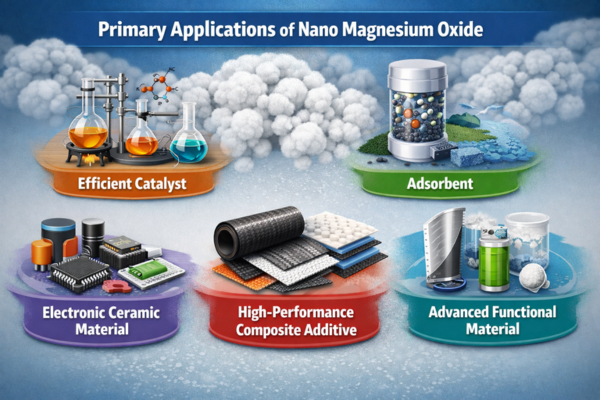
- Efficient Catalyst: Nano MgO performs exceptionally well in catalysis due to its large specific surface area, high activity, and stability. For example, in the synthesis of acetylacetone, using a specifically pretreated nano magnesium oxide catalyst can increase the yield from 80% to 95%.
- Adsorbent: Thanks to its large specific surface area, nano MgO demonstrates excellent adsorption performance. In wastewater treatment, it effectively adsorbs heavy metal ions and organic pollutants from water. In air purification, it can also adsorb harmful impurities in the air, improving air quality.
- Electronic Ceramic Material: Nano MgO has a high dielectric constant, extremely low dielectric loss, excellent thermal conductivity, as well as good mechanical properties and stability. Therefore, it is widely used in electronic ceramics. It can serve as an insulating material to enhance the signal transmission quality and stability of electronic devices. It is also an important raw material for MLCC, significantly increasing capacitor capacity while reducing size.
- High-Performance Composite Additive: As a reinforcing agent added to polymer, ceramic, or metal matrix composites, it significantly improves the mechanical properties, wear resistance, and thermal stability of the materials.
- Advanced Functional Material: Nano MgO can be used in stealth materials, thermal protection materials, electromagnetic shielding materials, as well as wound dressings and bone repair materials.
Fused Magnesium Oxide: Guardian in Extreme Environments
Fused magnesium oxide, also known as molten magnesium oxide, is produced by melting natural magnesite ore or other magnesium-rich raw materials in an electric arc furnace at temperatures exceeding 2800°C.
Key Characteristics of Fused Magnesium Oxide
Fused magnesium oxide is characterized by high purity, large crystal grains, and a dense structure. These properties give it extremely high thermal conductivity and electrical insulation, outstanding high-temperature stability (withstanding temperatures above 2800°C), and excellent resistance to alkaline slag erosion.
Primary Applications of Fused Magnesium Oxide
It is an excellent high-temperature electrical and thermal insulating material with many important applications in related fields.

- Refractory Material: Fused magnesium oxide particles are a key raw material in refractory manufacturing. They can be used to produce various refractory bricks, such as magnesia bricks and magnesia-chrome bricks. These bricks offer high-temperature stability, slag resistance, and corrosion resistance, making them suitable for linings in high-temperature equipment like blast furnaces and electric furnaces.
- Core Filler for Electric Heating Devices: As an insulating and thermally conductive filling material, it is widely used in household appliances (such as rice cookers and ovens) as well as industrial tubular electric heating elements.
- High-Grade Electrical Insulation Material: It can be used to produce insulating tubes for thermocouples, high-temperature insulating ceramic components, and more.
- Special Ceramics: It can serve as a ceramic raw material or additive to improve the sintering performance, strength, and thermal shock resistance of ceramic products.
Pharmaceutical-Grade Magnesium Oxide: A Precise Ingredient in the Health Field
Pharmaceutical-grade magnesium oxide is a high-purity product specifically produced for human applications. It is typically manufactured using stringent chemical synthesis processes and must comply with the mandatory standards of various national pharmacopoeias.
Key Characteristics of Pharmaceutical-Grade Magnesium Oxide
Its primary features are extremely high chemical purity and strictly controlled biosafety. It not only has requirements for the main component (magnesium oxide content) but also imposes extremely strict limits on impurities such as lead, arsenic, cadmium, chlorides, sulfates, and microbial levels. Additionally, it must possess suitable reactivity to be effective in the body.
Primary Applications of Pharmaceutical-Grade Magnesium Oxide

- Antacid: It reacts rapidly with gastric acid, neutralizing excess hydrochloric acid, reducing stomach acidity, and alleviating symptoms such as stomach pain and heartburn. Therefore, it is commonly used to treat conditions like gastric ulcers and duodenal ulcers caused by excessive stomach acid.
- Laxative: By creating a hyperosmotic environment in the intestines, it absorbs water, increases stool volume, stimulates intestinal peristalsis, and achieves gentle bowel movements. It also has minimal side effects, making it suitable for patients with long-term constipation.
- Nutritional Supplement: Pharmaceutical-grade magnesium oxide powder is an excellent source of magnesium. Magnesium supplements made from magnesium oxide have high bioavailability and can effectively replenish the magnesium required by the human body.
- Skin Ointment: Magnesium oxide can absorb secretions and moisture from the skin surface, keeping the skin dry and reducing bacterial growth. Therefore, it is often used to treat skin conditions such as eczema and dermatitis, alleviating symptoms like itching and redness.
Summary
Structure determines properties, and properties determine applications. The diverse uses of different types of magnesium oxide perfectly illustrate this principle. Stanford Advanced Materials (SAM) provides nano MgO, fused MgO, and pharmaceutical-grade MgO powders to meet your varied needs.







 Powder (1).jpg)
.jpg)