The characteristics of alumina ceramics (Al₂O₃) include hardness, strength, and high temperature resistance and stability to chemicals. Hence, they are popularly used in the aerospace industry, electronics, medicine, and many other industries. However, in making ceramics through conventional processes, the use of costly molds is inevitable due to geometric complexity. Enter DLP (digital light processing) 3D printing. It offers a new way to make high-performance ceramic parts with complex structures. The key pieces? Formulating a high-solid-content ceramic slurry, optimizing the sintering process, and precisely controlling shrinkage.
1. How to Formulate a High-Solid-Content Slurry
DLP technology cures the slurry layer by layer using photosensitive resin. The solid content of that slurry directly affects the printed part's density, shrinkage, and final mechanical properties. In general, higher solid content gives you better density and mechanical performance after sintering. But there's a catch: as solid content goes up, viscosity spikes and flow behavior gets worse. Studies show that high solid content pushes viscosity past the point where the slurry can self-level. Curing performance is closely tied to solid content. High viscosity also leads to uneven microstructure in the ceramic, which ends up hurting mechanical strength.
As for the optimization of the solid content, a study showed that the ideal combination of a photosensitive resin and two dispersants, BYK-110 and KH-570, could produce a super-low viscosity of 0.7377 Pa·s, and a solid content of 88 wt% of alumina ceramic was fabricated.[1] In terms of controlling flow behavior, the selection of dispersants, particle size distribution of powder particles, and photosensitive resin monomers all influence viscosity and curing depth significantly. It is necessary to incorporate additives, such as dispersants, to reach over 85 wt% solid content. Apart from these, another technique is the use of a "dual coupling" treatment method, which can achieve high solid content, high homogeneity, and ultra-low viscosity of ceramic powders. Besides, in-situ and real-time infrared monitoring is applied to the photosensitive resin monomers during the photocuring process.
2. Mechanical Properties After Sintering
Sintering is the make-or-break step that determines the final performance of DLP-printed alumina ceramics. When sintering in air, analysis shows that the phase composition and chemical bonding don't change. Under the right conditions, sintered parts deliver impressive mechanical performance: a flexural strength of 247.23 MPa, nanohardness of 30.9 GPa, elastic modulus of 428.35 GPa, and bulk density of 3.76 g/cm³. These results show that combining a high-solid-content strategy with an optimized sintering temperature is key to getting the best print quality and mechanical properties.
3. Controlling Anisotropic Shrinkage
When DLP-printed ceramics go through sintering, they almost always shrink—and the shrinkage isn't usually the same in all directions. That's because during debinding and sintering, gravity causes extra settling between layers. That's why designing dimensional compensation before sintering is critical for print accuracy. In the study mentioned above, the sintered parts shrank 8.3% in X, 8.8% in Y, and 11.5% in Z. Other studies with different formulations and sintering processes show different anisotropic patterns. For example, in DLP-printed alumina honeycomb structures, shrinkage was 7.54% in X, 7.42% in Y, and a more noticeable 13.04% in Z. When using SiO₂ as a sintering aid and sintering at 1450°C, shrinkage dropped even further: X: 3.84±0.25%, Y: 4.79±1.33%, Z: 4.17±0.87%. The differences in shrinkage come from a mix of factors: particle size distribution, solid content, type of sintering aid, and the sintering profile. Particle size grading has a big effect on sintering shrinkage—the ratio of height shrinkage to width shrinkage changes with particle size. Microwave sintering, on the other hand, speeds up interlayer sintering and increases anisotropic shrinkage.
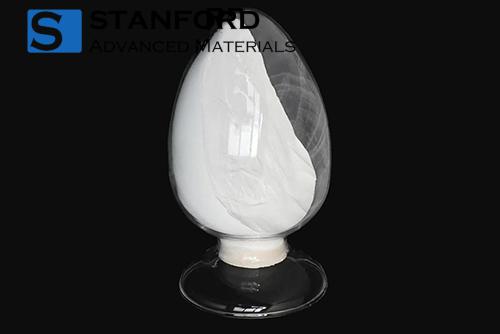
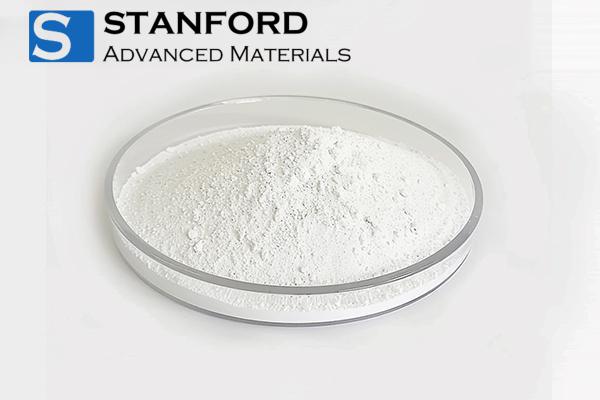
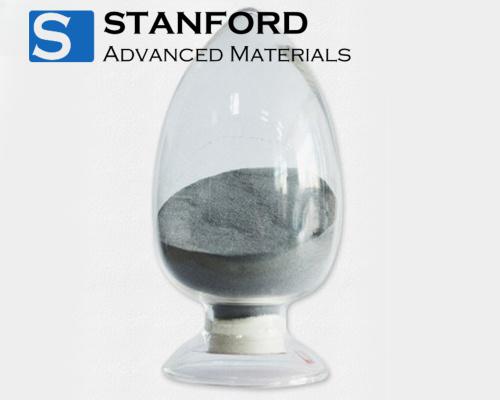
Nano Aluminum Oxide (Al2O3) 30nm, Alumina powder
4. Application Prospects
Alumina ceramics with high solid content, 3D printing using the DLP approach, is a very promising technology in the field of engineering, medicine, and electronics. With respect to electronic packaging, by improving the flow behavior of slurries and incorporating sintering agents, you will get alumina ceramics for electronic packaging. In addition, the DLP technology is also employed to create biomedical parts like bone regrowth scaffolds, among others.







.png)
 Powder (1).jpg)