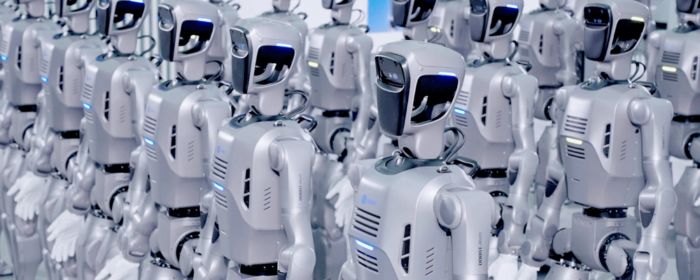
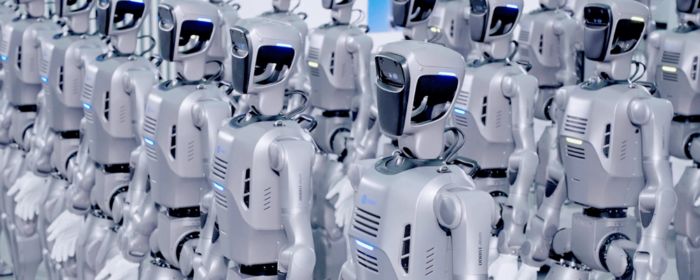
The robotics industry is taking off like never before—especially when it comes to humanoid robots. But mass-producing these machines? That's no easy feat. Engineers are staring down two big problems: How do we bring the cost down? And how do we shave off weight?
Luckily, two manufacturing methods that have already proven themselves in the auto industry—powder metallurgy and metal injection molding (MIM)—are stepping up to solve these challenges. The idea is simple: take what's worked for cars (cutting costs and trimming weight) and bring it over to humanoids.
Powder Metallurgy Squeezes Costs Down
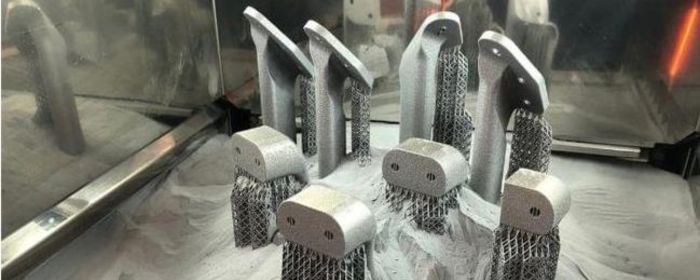
Okay, "powder metallurgy" sounds like a mouthful, but the idea behind it is pretty straightforward. Think of it like pressing parts out of metal powder—you put the powder into a mold, apply heat and pressure, and boom, you've got a part. Almost no machining needed afterward.
The biggest perk here is that it saves both material and energy. Traditional machining? You're usually cutting away a ton of metal—wasting maybe half of it. But powder metallurgy gets you close to the final shape right away, with material usage north of 95%. For anyone trying to crank out humanoid robots at scale, that kind of efficiency means serious cost savings.
This method works great for parts that weigh less than about 22 pounds. You get high precision, good consistency, and—here's the kicker—humanoid robots and cars actually have a lot in common when it comes to components. Both need strong, lightweight metal parts that can be made in large volumes. So if powder metallurgy helped the auto industry save money, it only makes sense to let it do the same for robots.
MIM Makes Complex Parts in One Shot
If powder metallurgy is your go-to for simpler shapes, MIM is what you turn to when things get complicated—especially with smaller parts.
MIM stands for metal injection molding, and you can think of it as a cross between plastic injection molding and powder metallurgy. The process is kind of cool: they mix metal powder with a binder to create something like plastic pellets, inject that into a mold, then remove the binder and sinter everything together. What you're left with is a dense, solid metal part.
The magic of MIM is that it can create shapes you just can't make with traditional machining—think internal cross-holes, walls as thin as 0.2 millimeters, threads, gears, you name it. And here's the thing: the more complex the part gets, the more cost-effective MIM becomes. Unlike CNC machining, which cuts away material bit by bit, MIM just makes the part in one go.
So where does this fit in humanoid robots? Think tiny gears for dexterous hands—ones with module sizes as small as 0.05. High strength, lots of design freedom—perfect for MIM. Same goes for sensor brackets, linkages, body connectors—all those small precision parts.
When Does It Make Sense
Of course, MIM isn't a magic bullet. It's got one big catch: tooling costs. A complex MIM mold can run you tens of thousands of dollars. When you're still prototyping a robot and tweaking the design constantly, dropping that kind of cash on a mold doesn't make sense. At that stage, CNC machining or even 3D printing is way more practical.
But once a humanoid robot goes into full production? Different story entirely. Industry folks generally agree that when you're talking annual volumes of 100,000 units or more, the per-part cost of MIM starts to drop dramatically. That's when the real advantage kicks in. As companies like Tesla, Unitree, and Zhiyuan push toward mass production, MIM could be looking at a serious boom.
Conclusion
Here's the takeaway: powder metallurgy and MIM are quietly paving the way for mass-produced humanoid robots. One brings down costs with efficient forming; the other handles the tricky stuff with design flexibility. Together, they're working toward the same goal—making robots lighter, cheaper, and tougher.
Next time you see a humanoid robot smoothly turning its fingers or walking steady, chances are some of those precision metal parts inside were born from powder.







 Powder.jpg)