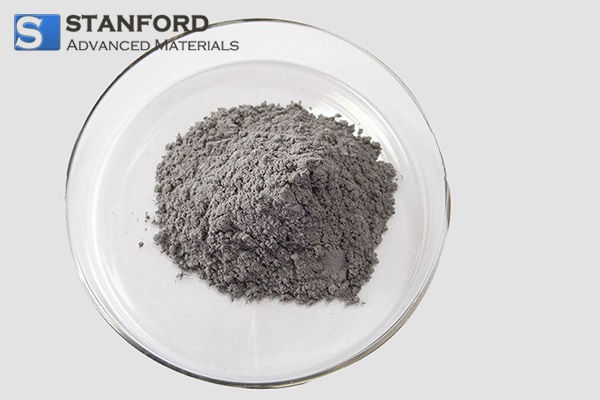
Description of Tungsten Disulfide (WS₂) Powder
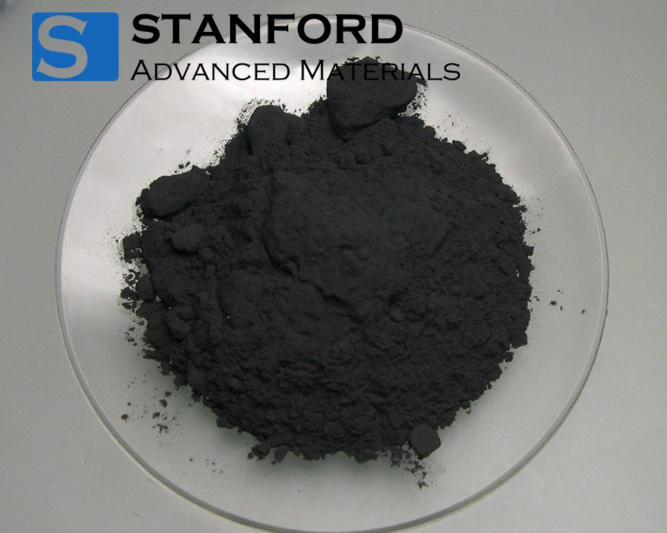
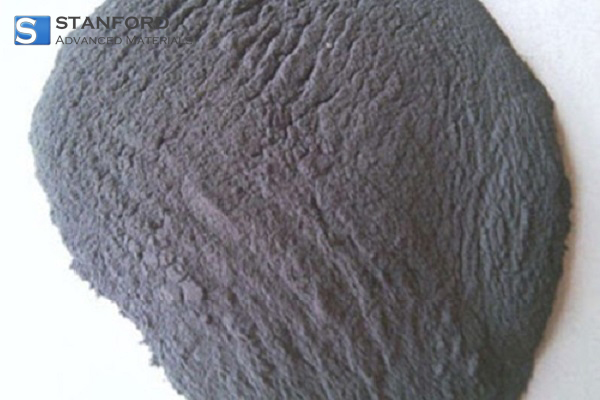
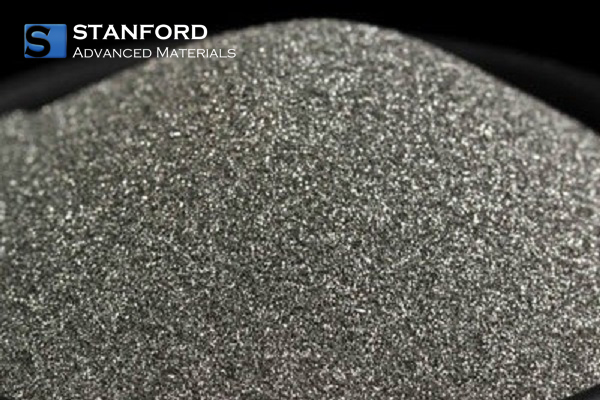
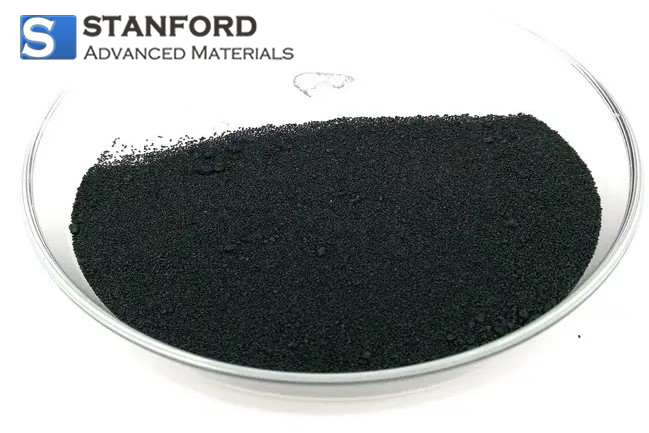
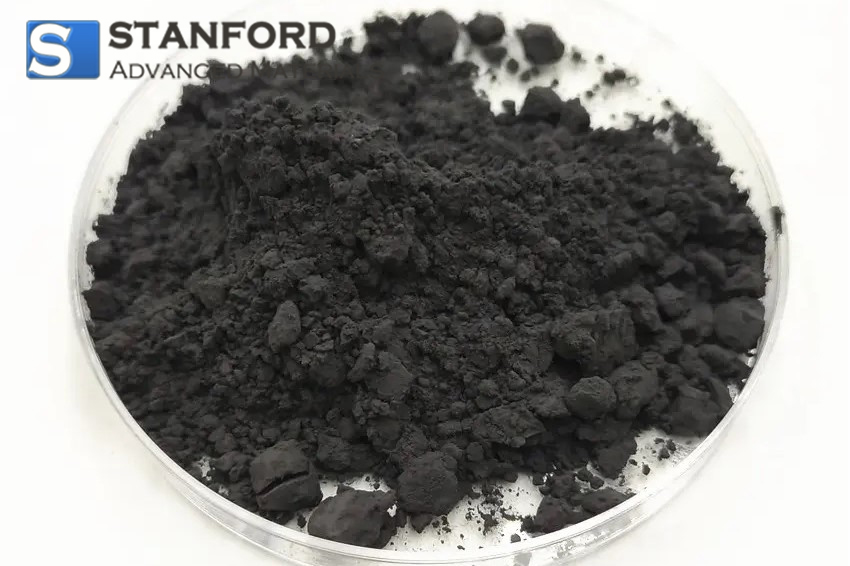
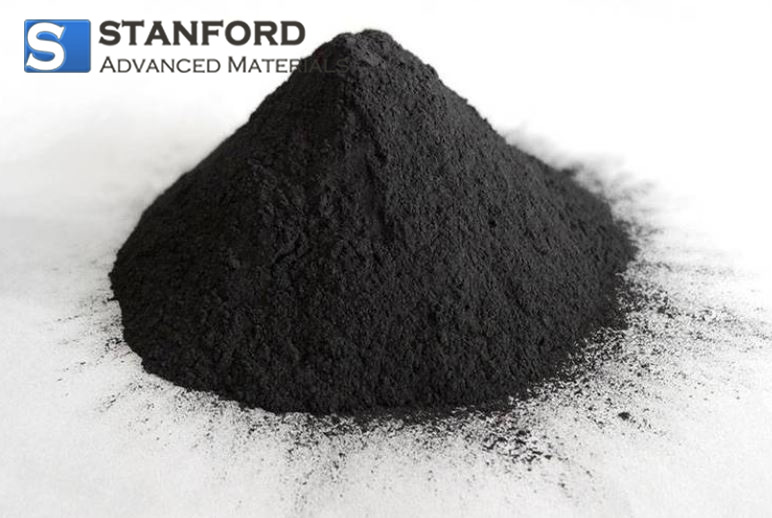
Tungsten disulfide (WS₂) is a black or silver-gray powder belonging to the transition metal dichalcogenide (TMDC) family. Its chemical formula is WS₂, and its molecular weight is 247.97 g/mol. The crystal structure is hexagonal, featuring a layered (S-W-S) configuration where strong covalent bonds exist within the layers and weak van der Waals forces act between the layers. This structure allows for easy cleavage, resulting in excellent lubricating properties.
As a high-performance inorganic material, the high-purity tungsten disulfide powder offered by SAM not only inherits the inherent chemical inertness and thermal stability of this material but also ensures uniform particle size and high purity through rigorous process control, making it suitable for a wide range of applications from extreme environment lubrication to advanced electronic devices.
Specification of Tungsten Disulfide (WS₂) Powder
|
APS
|
300μm, 60nm, or customized
|
|
Purity
|
99.9%
|
|
Bulk Density
|
1.24 g/cm3
|
|
Tap Density
|
3.39 g/cm3
|
|
Morphology
|
Amorphous
|
|
Color
|
Black
|
|
Chemical Formula
|
WS2
|
|
CAS Number
|
12138-09-9
|
Properties of Tungsten Disulfide (WS₂) Powder
Stanford Advanced Materials (SAM)'s tungsten disulfide powder exhibits the following outstanding properties:
- Excellent Lubricity: Features an extremely low coefficient of friction and high compressive strength, maintaining effective lubrication even under static high loads.
- High-Temperature Stability: Stable for use in air up to 450°C, and in inert atmospheres or vacuum up to 650°C or even higher.
- Low-Temperature Stability: Maintains its physical properties and does not become brittle in cryogenic environments.
- Chemical Inertness: Insoluble in water, alcohols, dilute nitric acid, and dilute sulfuric acid, with strong corrosion resistance. It only decomposes in aqua regia, hydrofluoric acid mixtures, or molten alkalis.
- Semiconducting Properties: As a transition metal dichalcogenide, WS₂ possesses a tunable bandgap (approximately 2.05 eV for monolayer WS₂), demonstrating excellent potential in electronics and optoelectronics.
Applications of Tungsten Disulfide (WS₂) Powder
-
Lubricants: WS₂ is one of the solid lubricant materials with the lowest known coefficient of friction, outperforming traditional molybdenum disulfide (MoS₂). It is widely used in bearings, gears, and sliding components in aerospace, as well as in lubricating oils and greases in the automotive industry.
-
New Energy & Energy Storage: WS₂ is an ideal electrode material.
-
Lithium/Sodium Batteries: Used as an anode material, offering high energy density and good cycling stability.
-
Supercapacitors: Utilizes its large specific surface area and excellent electrochemical activity.
-
Electronics & Semiconductor Devices: WS₂ is a two-dimensional material with a direct bandgap.
-
Transistors & Field-Effect Transistors (FETs): Features high on/off ratios and carrier mobility.
-
Photodetectors & Sensors: Demonstrates high sensitivity and fast response in photodetection, gas sensing, and humidity sensing.
-
Optoelectronic Devices: Used in solar cells, light-emitting diodes (LEDs), etc.
-
Catalysts: Used in the petrochemical industry as a catalyst for hydrodesulfurization, reforming, and polymerization reactions, characterized by high cracking performance and long service life.
-
Composite Coatings: Can be compounded with polytetrafluoroethylene (PTFE), nylon, etc., to create self-lubricating components; or mixed with volatile solvents for spraying to form corrosion-resistant, wear-resistant protective films.
FAQs
-
What is the difference between tungsten disulfide (WS₂) and molybdenum disulfide (MoS₂)?
Both are solid lubricants with layered structures, but WS₂ typically offers better chemical stability and oxidation resistance at higher temperatures. WS₂ has a lower coefficient of friction and higher compressive strength, making it particularly suitable for high-load and vacuum environments.
-
How should this product be stored?
It should be stored in a dry, clean warehouse in sealed packaging to protect against moisture. After use, the container should be promptly resealed, and contact with dust and other contaminants should be avoided to prevent pollution.
-
How stable is tungsten disulfide powder at high temperatures?
In standard atmospheric conditions, WS₂ begins to slowly oxidize around 450°C. In a vacuum, it exhibits extremely high thermal stability and can withstand temperatures above 1000°C without decomposing.
-
Does this material have magnetic properties?
On a macroscopic scale, tungsten disulfide typically exhibits diamagnetism. However, according to recent academic research, WS₂ prepared via specific synthesis methods (such as solid-state reaction) can display ferromagnetic characteristics at the microscopic level, suggesting potential applications in the field of spintronics.
-
What purity grades are available for this product?
Samaterials offers high-purity tungsten disulfide powder (e.g., 99.9% and higher). Specific purity levels and particle sizes (nanoscale or microscale) can be customized based on your specific application requirements.